
Travelling from Panama to Colombia by boat is one of the most iconic routes in backpacker travel. There are no roads connecting the two countries (the Darien Gap, one of the world’s biggest untouched rainforests, makes that impossible), so unless you fly, the boat is your only option. And honestly? The boat is the better option anyway.
There are two main ways to make the crossing: by speedboat through the San Blas Islands, or by sailboat. Each has its own vibe, pros, and downsides, and the right choice really depends on your priorities.
I’ve done this journey once, taking the speedboat route through the San Blas Islands with San Blas Adventures. I plan to go back and do the sailboat crossing so I can compare the two properly, but in the meantime, here’s everything I know from my own experience and from the many fellow travellers I met along the way in South America.
Quick facts:
- Speedboat trip: approximately 4 days, drops you in Capurgana
- Sailboat trip: approximately 5 to 6 days, drops you in Cartagena
- Both routes pass through the San Blas Islands (Guna Yala)
- You must get an exit stamp from Panama and an entry stamp for Colombia
- Neither route runs year-round in exactly the same way, so timing matters
🇨🇴 Recommended Reading: How to Get from Capurgana to Necocli
Speedboat vs. Sailboat from Panama to Colombia
The biggest practical difference between the two options isn’t the journey itself, it’s where you end up. The speedboat drops you in Capurgana, a small town right on the Colombian side of the Panama border. The sailboat takes you all the way to Cartagena.
This matters more than you might think. Cartagena is a major stop on most South America itineraries, easy to travel onwards from, and a city worth spending time in. Capurgana is genuinely charming, but it’s remote, and getting from there to anywhere else in Colombia takes the best part of a full day. That said, I actually loved Capurgana, so it’s not necessarily a downside.
Here’s a quick comparison to help you decide:
Speedboat (e.g. San Blas Adventures)
- Duration: 4 days
- Drop-off: Capurgana (then onward travel to Medellín or Cartagena)
- San Blas coverage: southern side of San Blas, including uninhabited islands and local Kuna Yala communities
- Vibe: more social, party atmosphere
- Typical cost: around $650 to $750 USD (verify before booking)
- Best for: adventurous travellers, those who want cultural immersion with local Kuna people
Sailboat
- Duration: 5 to 6 days (including several days on the islands)
- Drop-off: Cartagena
- San Blas coverage: northern side of the San Blas archipelago
- Vibe: relaxed, couples-friendly, more solitary
- Typical cost: around $400 to $550 USD (verify before booking, and note there are often add-on costs)
- Best for: those who want a slower crossing, prefer to arrive directly in Cartagena, or are travelling as a couple
🎫 Travelling on a one-way ticket? Get SafetyWing’s open-ended travel medical insurance for the most flexibility and cover you can trust.
The San Blas Islands (Guna Yala): What You’re Actually Travelling Through
Whichever route you choose, you’ll be passing through one of the most beautiful and biodiverse parts of Central America. The San Blas Islands, officially known as Guna Yala, are an archipelago of hundreds of tiny islands off Panama’s Caribbean coast, most of them fringed with white sand and coconut palms. The turquoise waters are home to coral reefs, and the communities living on these islands have maintained their traditional way of life, language, and governance for centuries.
It’s genuinely one of the most special places I’ve ever been to. Even on a trip that didn’t go entirely to plan, I left feeling grateful that I’d seen it.
One thing worth flagging: these islands are a protected indigenous territory, and the Kuna (Guna) people are the legal owners. You can’t visit independently without permission, and any tour you take should include a guide who has the right relationships with the local communities. Being a conscious traveller here really matters.
Taking the San Blas Adventures Speed Boat from Panama to Colombia
If you want to read my full account of the San Blas Adventures speed boat tour, you can read it there. To summarise: I don’t regret going, but I also wouldn’t call it straightforward and I’m not sure it’s something that I’d repeat in a hurry.
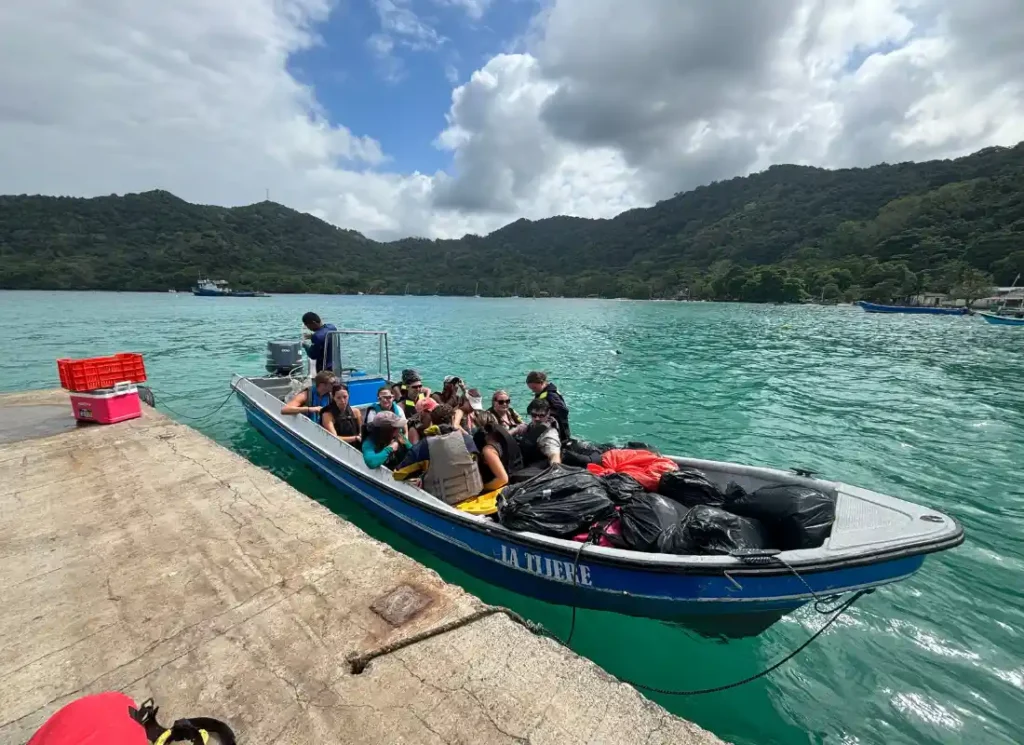
The San Blas Adventures speedboat picks you up from Panama City and leaves you in Capurgana, taking you through the southern side of the San Blas archipelago (a part of Guna Yala you won’t see on most tours that drop you back in Panama). We got to spend time with different communities of local Kuna people, visit uninhabited islands, eat fresh fruit and food prepared by the locals, and see how the culture shifts from the northern side to the southern side of San Blas. That part was genuinely brilliant.
What they don’t advertise quite as clearly is that the weather can be unpredictable. They sell it as palm trees, azure waters, and snorkelling the coral reefs, and while that’s true for some trips, mine was more rain, wind, and waves too turbulent to swim in, never mind snorkel. I won’t blame San Blas Adventures entirely for the weather, but they could be more transparent about how common this is.
The guides were also inexperienced. They felt more like hostel volunteers than proper guides, and when some of my fellow passengers were disrespectful towards the local Kuna people, nobody intervened. That was uncomfortable to witness and something I thought about for a long time afterwards. As someone who cares about ethical travel, it’s worth knowing.
The early mornings were also real. Think 4.30am wake-up calls every day, partly because of how long the day’s journey takes and partly to get ahead of the roughest waves. We arrived in Capurgana needing a long sleep.
All that said, I’ve heard from people who had an absolutely great time with San Blas Adventures, with calm waters, good guides, and perfect beach days. It seems to depend on timing, weather, and the group you end up with. It’s a bit of a gamble, but if you like adventure, it’s one worth taking.
From Capurgana: Once you arrive in Colombia, San Blas Adventures will help you get your passport stamped at the immigration office and give you guidance on where to stay. From Capurgana, your next stop is usually Necocli by speedboat, and then onwards to Medellin or Cartagena by bus. It’s another full day of travel, but Capurgana is worth a night or two if you have the time.
🇨🇴 Recommended Reading: How to Get from Capurgana to Necoclí
🇨🇴 Recommended Reading: How to Get from Capurgana to Medellin
Private and DIY Tours from Panama to Colombia
San Blas Adventures has a pretty strong grip on the speedboat market, and when I was researching my trip from Europe I genuinely believed their claim to be the only company running this route. They are not.
There are local operators running smaller group tours through the San Blas Islands, and if you’re someone who prefers a DIY approach, it’s worth asking around once you’re in Panama City or Puerto Lindo, which is the starting point for some sailboat companies and smaller operators. You’ll have more flexibility on timing and which islands you visit, and the groups are usually much smaller.
What you do need to keep in mind: you cannot just rock up to Guna Yala without a guide or prior permission. You need someone who has the right connections with the local communities. And you absolutely must make sure you get your exit stamp from Panama and your entry stamp for Colombia at the immigration office, because this is easy to overlook when you’re doing things more informally.
Taking the Sailboat from Panama to Colombia
I haven’t taken the sailing boat from Panama to Colombia yet, so this section is based on thorough research and conversations with fellow travellers who have. (Once I’ve done it myself, I’ll update this properly.)
The sailboat is widely considered the more relaxed, atmospheric way to make the crossing. The vibes are calmer and more intimate than the speedboat, and it tends to attract couples and people who aren’t in a rush. You’ll spend a couple of days visiting the northern San Blas Islands before beginning the open ocean crossing to Cartagena, which takes around two days.
The open sea crossing is the part that puts some people off, and fair enough. You’re out in open ocean, and the swell can be significant. This is also why the sailboat doesn’t usually run during the windy season, when the waves are simply too rough. If you’re prone to seasickness, take that seriously.
The big upside, of course, is arriving directly to Cartagena instead of needing an additional day or two of travel. Arriving by sailboat into one of South America’s most beautiful cities, after five or six days at sea, is supposed to be one of those travel moments that stays with you.
The sailboat is also the cheapest way to make the crossing, though it’s not budget travel exactly. Most sailboat trips include meals (often fresh lobster and healthy food cooked onboard), and some companies run what could genuinely be called authentic sailing voyages with a proper crew and real sailing experience rather than just a transport service. It’s worth reading reviews carefully and finding a reputable company.
Note: because the sailboat visits the northern side of the San Blas Islands rather than the southern side, you get a different experience of Guna Yala. Neither is better than the other, just different parts of the full archipelago.
What to Pack for the Boat from Panama to Colombia
Regardless of which route you choose, a dry bag is non-negotiable. Both speedboat rides and dinghy transfers to islands involve getting wet, and anything electronic, a passport, or anything you care about needs to be protected. Bring a small day pack you can take to the islands and leave your main bag stowed on the boat.
Other things worth bringing:
- Motion sickness tablets (especially for the sailboat crossing)
- Cash in USD, which is Panama’s currency and widely accepted by guides and for any extras
- A small bag of snacks for the boat days
- Sunscreen and a hat (you will be in direct sun for long stretches)
- A lightweight jacket or layer for evenings, which get cold on the water even in the tropics
Is It Safe to Travel by Boat from Panama to Colombia?
Generally, yes. Both routes are well-established and thousands of travellers do this journey every year. The main risks are weather-related (rough seas, delays, early departures to avoid the worst of the waves) rather than safety risks in the traditional sense. Travelling during the low-wind season gives you a better chance of calmer waters.
The Darien Gap itself is a different story, dangerous and not to be attempted under any circumstances, but that’s why you’re taking the boat in the first place.
Border crossings can feel daunting but are straightforward with a guide. Make sure you get your exit stamp from Panama before you leave and your entry stamp for Colombia when you arrive. If you’re doing this independently rather than with a tour company, visit the immigration office in Panama City before you depart.
🇵🇦 Recommended Reading: Is it safe to travel solo in Panama?
Panama to Colombia Boat FAQs
Which is better, sailboat or speedboat from Panama to Colombia?
It depends entirely on your priorities. The sailboat is cheaper and delivers you directly to Cartagena, making onward travel much easier. It’s the more relaxed option and suits people who want an authentic sailing voyage. The speedboat gives you access to the southern San Blas Islands and more interaction with local Kuna communities, but drops you in Capurgana, which requires another full day of travel to reach anywhere else in Colombia. The speedboat is also more social and tends to attract a younger, more party-oriented crowd.
How long does the boat journey take from Panama to Colombia?
The speedboat journey takes around 4 days, with early morning starts most days (how early depends on the weather and sea conditions). The sailboat takes 5 to 6 days, including time exploring the northern San Blas Islands before the two-day open ocean crossing to Cartagena.
How much does it cost to travel by boat from Panama to Colombia?
Speedboat tours typically cost between $550 and $650 USD. Sailboat trips are usually cheaper, ranging from around $400 to $550 USD, though prices vary a lot between operators and some charge extra for food, drinks, or island entry fees. Always check what’s included before booking. There may also be immigration fees to budget for.
What is the best time of year to travel from Panama to Colombia by boat?
The low-wind season (generally December to April) tends to offer calmer waters for the speedboat route. The sailboat avoids operating in the windiest months due to the open ocean crossing. Always check with your operator about current conditions before you travel.
Do I need a visa for this border crossing?
You’ll need to check whether you need a visa to enter Colombia based on your nationality; many nationalities don’t. There’s no additional visa required specifically for entering by sea. The most important thing is to make sure you get an exit stamp from Panama and an entry stamp from Colombia. If you’re travelling with a reputable tour company, they’ll manage this process for you.
What should I do after arriving in Capurgana?
From Capurgana, the next step is usually a speedboat to Necocli and then a bus to Medellin or Cartagena. It takes the best part of a full day. If you have time, spend a night or two in Capurgana first; it’s a really special little place with no roads, great food, and beaches that feel a long way from the rest of the world.

Hey there isabella
I just read a few of your posts and they are very helpful.
Im quite concerned about the san blas island trip i jusy booked (before reading this). Even though it’s with another company that seems to have a bigger boat that you sleep on and stuff, im worried about the weather.
When was your trip? Im leaving in a few days and hopefully it wont be as wet!!
Good luck on your endeavours xx
Hey Ana! Don’t worry, if you’re on a bigger boat then for sure you won’t get so wet 🙂 I went in February, which is during windy season (December to April) so the waves will be smaller for you and there should be places to take shelter if it rains. Hope you have a great trip, let me know how it goes! X x
We are looking to travel from the 30/11/24 Panama to Colombia by boat. We need to be in Colombia by 4/12/24. Can you help us with this? If not, could you refer us to someone who can please? Vicki Berrill
Hey Vicki! Sorry for the late response, but I don’t have any affiliation with these companies. Your best option is to ask whoever is in charge at your accommodation or approach a local guide. Fingers crossed you manage to get a last minute ticket!
Hey Isa,
I am travelling in Central America right now and I am looking for a sailboat trip from Panama to Colombia. The description you give is what I am looking for but I don’t find the right link in the ones in your blog… do you know where I could find it to book?
Your research is very useful! Thank you so much,
Romane
Hey Romane!
The most common company I’ve heard of people using is Blue Sailing: https://bluesailing.net/ but I haven’t done the trip with them personally!
I’m glad you’re finding this info useful 🙂
Isa x