

Guatemala’s official currency is the Guatemalan Quetzal (GTQ), and while US dollars are widely accepted in tourist areas, you’ll need quetzales for markets, chicken buses, and rural areas. ATMs are widely available but charge fees, and card payments often come with a surcharge of up to 10%. Here’s everything you need to know about money in Guatemala before you go.
Quick facts about Guatemalan Currency:
- Currency: Guatemalan Quetzales (GTQ)
- Conversion rate: 13Q = approx $1USD (updated 2026, check the latest exchange rate here)
- Currency symbol: Q
- Currency code: GTQ
- US dollars accepted in most tourist areas, but not always at a great rate
- ATM fee: roughly $4 to $8 per withdrawal (fixed, not a percentage)
- Best ATMs: 1B (blue) and BAC
- Card surcharge: up to 10% in many places
- Small denominations are your friend
What Currency Does Guatemala Use?
The official currency of Guatemala is the Guatemalan Quetzal, named after Guatemala’s national bird. You’ll see it written as Q or GTQ, and the current exchange rate fluctuates, so it’s worth checking a live currency converter before you travel.
Quetzal banknotes come in denominations of 1, 5, 10, 20, 50, 100, and 200 quetzales. There are also quetzal coins and centavo coins (100 centavos make one quetzal), though the smaller ones are rarely used in practice.
Related reading: Currencies in Central America | Guide to Guatemala City Airport
Can You Use US Dollars in Guatemala?
Yes, in many places. US dollars are accepted at Guatemala City Airport, most hotels, hostels, tour operators, and upscale restaurants. But local places, like markets, chicken buses, smaller towns, street food stalls, and rural areas, will only take quetzales. Don’t expect to pay your 10-quetzal chicken bus fare in dollars!
One thing to be aware of: when you pay in dollars, your change will almost always come back in quetzales, and the exchange rate the vendor uses may not be the best deal for you. You can’t usually negotiate this, so it’s worth having local currency on hand rather than relying on dollars as a backup.
When I first arrived in Guatemala, I got by on US dollars for the first couple of days before making my first ATM withdrawal. It works fine for the airport and taxis, but I’d recommend getting quetzales sorted fairly quickly once you arrive, especially if you’re heading somewhere like Lake Atitlán or Antigua where you’ll want to use local transport and markets.
ATMs in Guatemala: What You Need to Know
Cash machines are easy to find in Guatemala City, Antigua, Panajachel, and other tourist hubs. They’re less common in smaller towns and rural areas, so withdraw before you head off the beaten track.
The most important thing to know about ATMs: they charge a fixed fee per withdrawal, usually around $4 to $8, regardless of how much you take out. That means it makes financial sense to withdraw a larger amount less frequently, as long as you have a safe place to keep your cash (a money belt or a locker at your hostel works well).
Best ATMs to use:
- 1B (blue machines) and BAC charge lower fees and are the best option for foreign debit cards
- 5B (yellow machines) are the most common, but charge closer to $8 per transaction
Most ATMs give you the choice of withdrawing in quetzales or US dollars. If you’re continuing through Central America (where every country has a different local currency), dollars can be handy as a buffer, since they’re the common denominator across the region.
Always check with your bank before you travel: some charge additional fees for international withdrawals or foreign currency transactions on top of the ATM fee, which can add up quickly.
Paying by Card in Guatemala
The majority of tourist-facing businesses in Guatemala accept card payments, but there’s a catch: a debit card surcharge of up to 10% is very common. That’s not a typo. Some places charge you 10% on top of your bill just for the privilege of tapping your card. For that reason, cash is generally the smarter payment method, especially for accommodation, tours, and restaurants.
If you do want to pay by card, a good travel credit card with no foreign transaction fees can help reduce the damage. But in most cases, withdrawing cash from an ATM and paying in quetzales will work out cheaper overall.
Currency Exchange in Guatemala: Is It Worth It?
You can exchange money at exchange bureaus (sometimes called casas de cambio) in Guatemala City and Antigua. Currency exchange in Antigua Guatemala is fairly straightforward to find near the central park. However, the exchange rates at bureaus are usually worse than what you’d get at an ATM, especially if your dollars are already exchanged from another currency (British pounds, euros, etc.), because you’re essentially converting twice and losing a little each time.
The exception might be if your bank charges very high international withdrawal fees, in which case it’s worth comparing your options before you decide.
The Best Way to Pay for Things in Guatemala: A Quick Summary
| Situation | Best payment method |
|---|---|
| Markets and street food | Quetzales (small bills) |
| Chicken buses | Quetzales only |
| Hotels and hostels | Card or dollars usually accepted |
| Tours and travel agencies | Dollars or card (card usually has a surcharge) |
| Rural areas and smaller towns | Quetzales only |
| Guatemala City Airport | Dollars or card |
The golden rule: always carry quetzales in small denominations. Handing over a Q100 note for a Q10 bus fare will get you a very specific look from the driver, and occasionally they’ll just refuse and wait for the next passenger.
Common Mistakes with Money in Guatemala
Relying too heavily on dollars. Dollars work great at the airport and for big purchases, but you’ll struggle in markets, on buses, and in rural areas. Get quetzales sorted early.
Using the yellow ATMs. The 5B yellow machines are everywhere, but they’re the most expensive for foreign cards. Seek out the blue 1B or BAC machines instead.
Paying by card without checking the surcharge. Always ask first. A 10% fee is a lot, especially on a bigger purchase like a multi-day tour.
Not having small change. This is genuinely a problem on chicken buses and in markets. Break your bigger bills whenever you have the chance, like at a supermarket or when paying for something at a hotel.
Forgetting to check your bank’s foreign transaction fees. Some banks are fine, others add 2-3% on top of everything. It’s worth knowing before you go.
A Brief History of the Guatemalan Quetzal
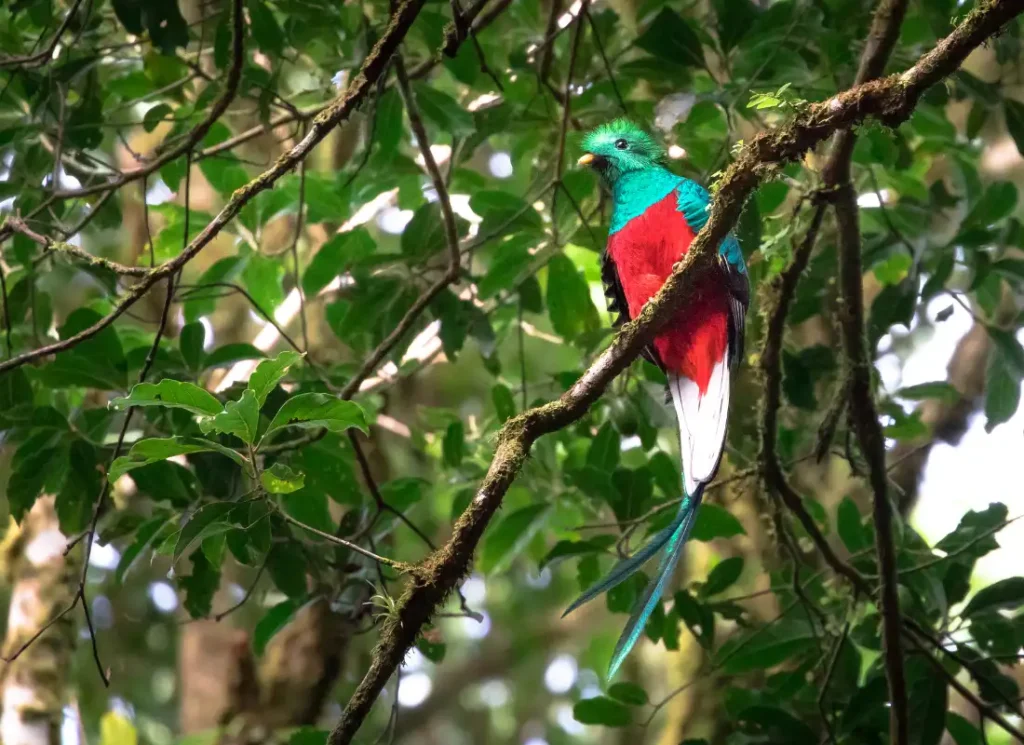
The Guatemalan Quetzal is named after the national bird of Guatemala, one of the most striking birds in Central America. In Mayan and Guatemalan legend, the Quetzal symbolises freedom and wealth, and the feathers of these birds were used as a form of currency by indigenous civilisations long before European contact, because of their beauty and rarity.
After the Spanish conquest of Guatemala in the 16th century, various forms of colonial currency took over. In 1925, Guatemala introduced its own national currency as a way of honouring its heritage and asserting its independence. The Quetzal bird features on the banknotes and one-quetzal coin to this day.
Nearly 100 years later, the quetzal remains one of the more stable currencies in Central America. The central bank of Guatemala (Banco de Guatemala) oversees monetary policy, and the GTQ has held relatively steady against the US dollar over the years compared to some of its regional neighbours.
If you’re lucky enough to spot a real Quetzal bird during your travels, consider it a very good omen. They’re beautiful, elusive, and honestly a highlight of any trip to the Guatemalan highlands.
Related Posts
Planning your trip to Guatemala? Here are a few more guides that might help:
Currencies and Money in Central America
How to Get from Guatemala Airport to Antigua
Chicken Bus from Antigua to Lake Atitlán
Best Places to Stay in Lake Atitlán
Eating and Street Food in Guatemala
Cost of Living in Guatemala (2026)

This was so interesting to read as I did not know much about the history of the currency of Guatemala. It’s good to know that you can use US Dollars initially from the airport, but that having some of the local money is best to use for certain things. Great travel advice!
Is it true that some countries in Central America accept cryptocurrencies as a form of payment, and if so, how widely is this practice adopted?
Hey! This is only true for El Salvador, where Bitcoin is an official currency. In El Salvador you can pay for most things in Bitcoin, but it’s not commonly accepted in other countries in Central America. Hope that helps!
I have read so many posts on the topic of the blogger lovers but this post is
really a pleasant article, keep it up.