Guatemala is one of the most visually stunning countries in Latin America, with an indigenous culture that has survived centuries, a colonial history you can still walk through, active volcanoes on the horizon, and one of the deepest lakes in the world sitting in a volcanic crater. It’s also one of the best-value travel destinations in Central America, and for most travellers who go, it ends up being a favourite.
I travelled through Guatemala for several weeks as part of a longer backpacking trip through Central and South America, and it was honestly one of the highlights of the whole trip.
This Guatemala travel guide covers everything you need before you go: the best places to visit, how to get around, what it costs, how safe it really is, when to go, how to get there, and a suggested itinerary to help you make the most of your time.
Sections in this Guatemala Travel Guide
Quick Facts
Is Guatemala Worth Visiting?
How to Get to Guatemala
Best Places to Visit in Guatemala
Suggested Guatemala Itineraries
Getting Around Guatemala
When to Visit Guatemala
Guatemala Budget
Food in Guatemala
Is Guatemala Safe in 2026?
Practical Guatemala Travel Tips
FAQs

Quick Facts
- Currency: Guatemalan Quetzal (GTQ). Approx. 7.7 GTQ to 1 USD
- Language: Spanish (indigenous languages in some rural areas and small towns)
- Best time to visit: November to March (dry season)
- Recommended trip length: 2 to 4 weeks
- Visa: Most nationalities (US, UK, EU) receive 90 days on arrival
- Tap water: Not safe to drink. Bring a refillable water bottle and top up from filtered water at your accommodation
- Getting around: Tourist shuttle buses are the easiest and safest option; chicken buses are cheaper but need more caution
- Vaccinations: Yellow fever certificate required if arriving from an affected country; dengue fever precautions recommended
Is Guatemala Worth Visiting?
Yes. Guatemala is absolutely worth visiting! Some of the most incredible things to see in Guatemala include: active (and dormant) volcanoes, Mayan ruins, very well-preserved colonial cities, a vibrant indigenous culture, and genuinely low travel costs. It is one of the most rewarding destinations in Central America, especially for travellers who want something beyond standard tourist destinations.
Guatemala does have a complicated history, including a civil war that ended in 1996, and some areas still struggle with violent crime and poverty. However, the tourist areas are well-established, the people are warm and generous, and for travellers who use a bit of common sense, Guatemala is a fantastic place to visit. Most people I know who went for two weeks came back wanting to go for two months.
How to Get to Guatemala
Flying into Guatemala
Almost all international flights arrive at La Aurora International Airport in Guatemala City (GUA). It is the main entry point for visiting Guatemala and well-connected from North America, with frequent direct flights from cities including Miami, Houston, Dallas, and New York. From Europe, you will almost always connect through a US hub (I did actually take a direct flight from Madrid to Guatemala City with Iberia, but it’s not a common route unless you are travelling from Madrid), which means US transit visa requirements apply, so check this before you book.
❗️Even if you are only transiting through the USA, you need an ESTA, visa, or visa waiver, depending on your nationality.
There is a second, smaller airport in Flores (FRS) in the north, which is useful if you’re planning to visit the Tikal ruins and want to skip the long overland journey from the south.
Arriving in Guatemala by land
Guatemala shares borders with Mexico, Belize, El Salvador, and Honduras, and overland crossings are common for travellers doing longer Central America routes. The most popular entry points are from Mexico in the north and from El Salvador in the south.
The single most important thing I can tell you about any land border in Central America: always make sure your passport is stamped, both entering and leaving. I heard a story from a friend who got stuck at the Guatemala-Belize border because they hadn’t been properly stamped on entry, and it caused significant problems. Sometimes the checkpoint is easy to miss, so don’t assume it’s been done.
I crossed the Guatemala-El Salvador border myself as part of a sixteen-hour bus journey from Antigua down to Nicaragua, which sounds brutal but was genuinely fine (ok, well, ish). The crossing was uneventful, and I picked up some great company along the way.
For the Guatemala-Honduras border, be aware that there are strict limits on electronics and a ban on professional camera and drone equipment. If you’re a content creator or photographer, this border requires careful planning.
The easiest and most fuss-free way to manage any border crossing in Central America is to book through your accommodation or a reputable shuttle company. They know the routes, the processes, and will often help you navigate the crossing itself.

Best Places to Visit in Guatemala (Top Destinations for 2026)
There is a well-worn tourist trail in Guatemala, and it exists for good reason. It covers the most accessible, most beautiful, and safest destinations in the country. Here is a breakdown of the main tourist places to visit and what to expect.
Antigua Guatemala
Antigua is where almost everyone starts, and it earns that status. It is a small, cobblestoned colonial city ringed by three volcanoes, with colourful buildings, a thriving hostel scene, excellent coffee, and excellent food. It is more of a base than a destination in itself: there is enough to fill two or three days in the city, but its real value is what surrounds it. The Acatenango Volcano hike, coffee farm tours, Spanish language schools, and various day trips all radiate out from Antigua, making it an excellent hub for the first part of your trip.
I was surprised by how small it is. You can walk end to end in about fifteen minutes. But it is a great place to settle in, find your feet, and meet other travellers before heading further into the country.
Most people arrive at Guatemala City Airport and head straight to Antigua, which is the sensible approach. If you want to know the best way to make that journey, read the full guide to [getting from Guatemala City Airport to Antigua safely].
Lake Atitlan (Lago de Atitlan)
Lake Atitlan is the deepest lake in Central America, and one of the most beautiful places I have ever been. It sits in a volcanic crater surrounded by three volcanoes and dotted with small towns that each have their own distinct character. The water is a shade of blue that genuinely does not look real. It is the kind of place that people visit for three days and end up staying for three weeks.
The main access point by land is Panajachel. From there, short public boat rides shuttle between all the towns around the lake for a dollar or two. The boats are a genuinely enjoyable and very safe way to travel, though they stop running in the early evening.
More Lake Atitlán Guides
🇬🇹 How to get from Antigua to Lake Atitlan
🇬🇹 How to get from Guatemala Airport to Lake Atitlan
🇬🇹 Things to do in Lake Atitlan
The five main towns around Lake Atitlan each attract a different kind of traveller:
Panajachel
Panajachel is the most accessible and most commercial, but it gets unfairly dismissed. We really enjoyed it and found plenty to do! Read the guide here of 15 best things to do in Panajachel.
San Pedro La Laguna
San Pedro La Laguna has a reputation as the party town of Lake Atitlan. It is busier and better on weekends, so if nightlife is a priority, plan accordingly (we went during the week expecting a bit of an atmosphere, and there was not one). It also has a strong Spanish language school scene if you want to combine study with travel.
San Marcos La Laguna
San Marcos La Laguna leans into yoga retreats, holistic wellness, and meditation. It is beautiful and peaceful but can feel more like a luxury retreat hub than an authentic Guatemalan town. Great if that is what you are after, but a bit disappointing if it’s not.
San Juan La Laguna
San Juan La Laguna is my favourite town for experiencing genuine Guatemalan culture. It has a strong indigenous identity, artisanal textile workshops run by local cooperatives, colourful umbrella-lined streets, and a much more local feel than San Marcos.
Santa Cruz La Laguna
Santa Cruz La Laguna is the most off-the-beaten-path of the five I have mentioned (there are other towns, but they’re generally quite a bit smaller and difficult to get to). It is only accessible by boat (not by road), which has helped it keep a quiet, authentic character. If you want to really disconnect, this is the spot.
🚤 Read more here about choosing where to stay at Lake Atitlán
Acatenango Volcano
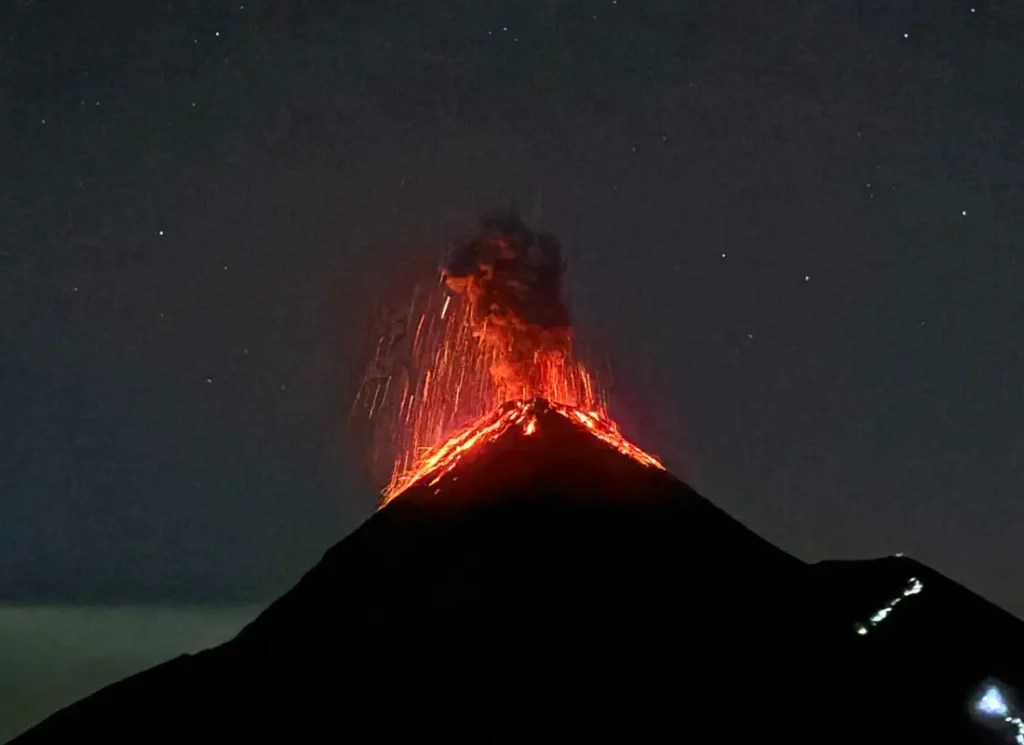
If you do one activity in Guatemala, make it this one. The Acatenango overnight hike is one of the most popular things to do in Guatemala, and it more than lives up to the hype. Acatenango Volcano itself is dormant, but you have a direct view of Volcan de Fuego, a very active volcano that erupts roughly every twenty minutes. Watching it light up the night sky from the base camp is one of those travel experiences that I will truly never forget.
It is not an easy hike. The ascent is steep, the altitude hits you, and the final section to the summit is genuinely brutal. You do not need to be a seasoned hiker, but you need to be prepared. The cold at base camp can be pretty brutal depending on the season, and the volcanic ash on the summit section gets absolutely everywhere. I have written a detailed packing list for the Acatenango overnight hike that I would recommend reading before you book!
Tikal and Flores (Mayan Ruins)
The Mayan ruins at Tikal are a UNESCO World Heritage Site and widely considered one of the best things to do in all of Central America, not just Guatemala. The temples rise dramatically above the jungle canopy, the wildlife is extraordinary, and the scale of the place is humbling. Getting there from the south takes most of a day, usually via the town of Flores, which sits on a small island on Lake Peten Itza and is charming enough to warrant a night or two in its own right.
El Mirador is for those who really want to go off the beaten track. Older than Tikal and less excavated, it requires a multi-day jungle trek to reach, and sees a fraction of the visitors. If you have the time and the energy for it, the reward is a genuinely unique experience.
Semuc Champey
Semuc Champey is a national monument in the north of Guatemala where a series of cascading limestone pools step down a hillside in improbable shades of turquoise and blue. The surrounding jungle makes it feel genuinely remote, and the journey to get there is long enough that it has stayed beautifully uncrowded. I did not make it there on my trip, and it is one of my biggest travel regrets from the whole journey through the Americas. Every single person I met who had been said it was the highlight of their time in Guatemala.
Quetzaltenango (Xela)
Guatemala’s second city goes by two names: Quetzaltenango officially, Xela (pronounced SHAY-la) in practice. It is a very different atmosphere to Antigua: less polished, fewer tourists, more of a real Guatemalan city. Surrounded by volcanoes and hot springs that make for excellent day trips, it is also one of the best places in Central America to study Spanish, with well-regarded language schools offering one-to-one lessons at reasonable prices. I met a lot of people in Guatemala who had originally come for a few weeks of Spanish lessons and ended up extending their whole trip because they loved the place so much.
Rio Dulce and the Caribbean Coast
If you want something completely different from the volcanic highlands, Rio Dulce offers a glimpse of Guatemala’s Caribbean side. It is a river town connecting a jungle waterway to the Caribbean coast, warm and lush, and it does not feel like the rest of Guatemala at all. It also serves as a jumping-off point for Livingston, a small Garifuna town on the Caribbean coast that is only reachable by boat. A genuinely unique experience if you have the extra time.
Guatemala City
Most travellers arrive at Guatemala City Airport and head straight to Antigua, and for most people, that is the right call. The capital is not a particularly safe or tourist-friendly destination, although Guatemala Airport itself is fairly safe. There is more than enough elsewhere in Guatemala to fill your trip, so unless there is something specific that you want to see in Guatemala City, I recommend going elsewhere! If you arrive late at night, it makes sense to stay near the airport and travel to Antigua in the morning.
Suggested Guatemala Itineraries (1 to 4 Weeks)
How long should you spend in Guatemala? My recommendation is at least two weeks, but of course that all depends on how long you have available, and if there are any other countries in Central America that you want to see at the same time. Here is how I would structure different trip lengths:
One Week in Guatemala
One week is tight, but doable if you focus and do not try to cram in the north. Stick to the southwest, which is where the most rewarding destinations are anyway, and resist the temptation to keep moving. Two or three nights in a place is genuinely better than one.
Days 1 to 2: Antigua. Arrive, get settled, and spend a day walking the city. Wander the cobblestoned streets, climb up to Cerro de la Cruz for the view over the rooftops and volcanoes, and eat well.
Day 3 to 4: Acatenango Volcano. The hike departs in the afternoon and you will spend the night at base camp, watching Volcan de Fuego erupt after dark. You return to Antigua the following morning, tired but completely exhilarated. Give yourself the rest of day four to recover, do laundry, eat a big meal, and sort out your onward shuttle to Lake Atitlan.
Days 5 to 7: Lake Atitlan. Three nights at the lake is the minimum that lets you actually experience it rather than just pass through. As you’re a bit short on time, I recommend basing yourself in Panajachel and use the public boats to explore.
From Lake Atitlan you can either fly home from Guatemala City or continue overland south towards El Salvador and Nicaragua.
Two Weeks in Guatemala
Days 1 to 3: Antigua. Arrive and give yourself a proper two nights in the city before the hike. Explore the ruins of the old cathedral, the central market, and the surrounding neighbourhoods.
Day 3 to 4: Acatenango Volcano. The hike departs in the afternoon of day three. You will spend the night at base camp watching Fuego do its thing, summit before sunrise if the weather is on your side, and return to Antigua (or wherever else you were collected from) by midday on day four. Rest, recover, and spend the afternoon sorting out your onward journey.
Days 5 to 8: Lake Atitlan. Four nights gives you real time at the lake. Base yourself in Panajachel or, if you want a quieter experience, take the boat straight to one of the smaller towns and use that as your base instead.
Days 9 to 10: Quetzaltenango (Xela). Take a shuttle west to Guatemala’s second city. It is a different energy entirely from Antigua: more local, less polished, and surrounded by hiking opportunities. Do a day trip to the Fuentes Georginas hot springs or to the Santa Maria volcano.
Days 11 to 14: Flores and Tikal. Take an early shuttle or flight from Xela or Guatemala City up to Flores. Spend a night in Flores itself, which is a charming little island town worth an evening of wandering and a good dinner. Then dedicate a full day to Tikal, arriving early to beat the heat and the crowds. If you want to see the sunrise over the jungle canopy from the top of Temple IV, which I would strongly recommend, book a sunrise tour the night before.
Three to Four Weeks in Guatemala
Days 1 to 3: Antigua. Same start as the two-week itinerary: settle in, explore the city, do the Acatenango overnight hike. With more time ahead of you, you can afford to spend an extra day in Antigua without feeling like you are wasting it. Consider a full-day coffee farm tour, a market visit in nearby Chichicastenango, or a slow morning with good coffee and no agenda.
Days 4 to 9: Lake Atitlan. Spend your first couple of nights in Panajachel to get your bearings, then stay a few nights in San Pedro if you want the social scene, Santa Cruz if you want silence and stars, or San Juan for a bit more of a cultural experience.
Days 10 to 14: Quetzaltenango (Xela). Xela is a genuinely interesting city to explore beyond its reputation for Spanish schools: the central park and the neoclassical municipal theatre are worth an hour of your time, the local market is one of the more authentic you will find on the tourist trail, and the food scene is excellent and cheap.
Days 15 to 19: Semuc Champey. This is the destination that most two-week itineraries have to skip, and it is genuinely worth the effort of getting there. The journey from Xela takes most of a day, but it is 100% worthwhile. Stay at least two nights to properly explore the pools, do the cave tour, and hike up to the mirador for the view over the waterfalls.
Days 20 to 24: Flores and Tikal. From Semuc Champey, continue north to Flores rather than backtracking south. Spend a night in Flores, dedicate a full day to Tikal (go early, stay late, book the sunrise tour if it is available), and consider whether you have time for El Mirador if a multi-day jungle trek is on your radar. (El Mirador requires planning and a local guide, so if it interests you, get it organised in advance.)
Days 25 to 28: Rio Dulce and the Caribbean Coast. To taste a completely different side of Guatemala, head east from Flores towards Rio Dulce. The boat journey down the Rio Dulce river to Livingston, through jungle gorges and hot spring waterfalls, is one of those travel moments that catches you completely off guard. Livingston itself is a Garifuna town on the Caribbean coast that has a totally different culture, food, and music from the rest of Guatemala.

Getting Around Guatemala: Transport Guide
Tourist Shuttle Buses
The easiest and safest way to travel between destinations in Guatemala. Tourist shuttles run between all the main stops, pick you up and drop you off at your accommodation, and you will almost always share the journey with other travellers. They cost more than public buses but the difference is modest and absolutely worth it for the convenience and safety, especially with bigger bags.
Chicken Buses (Public Buses)
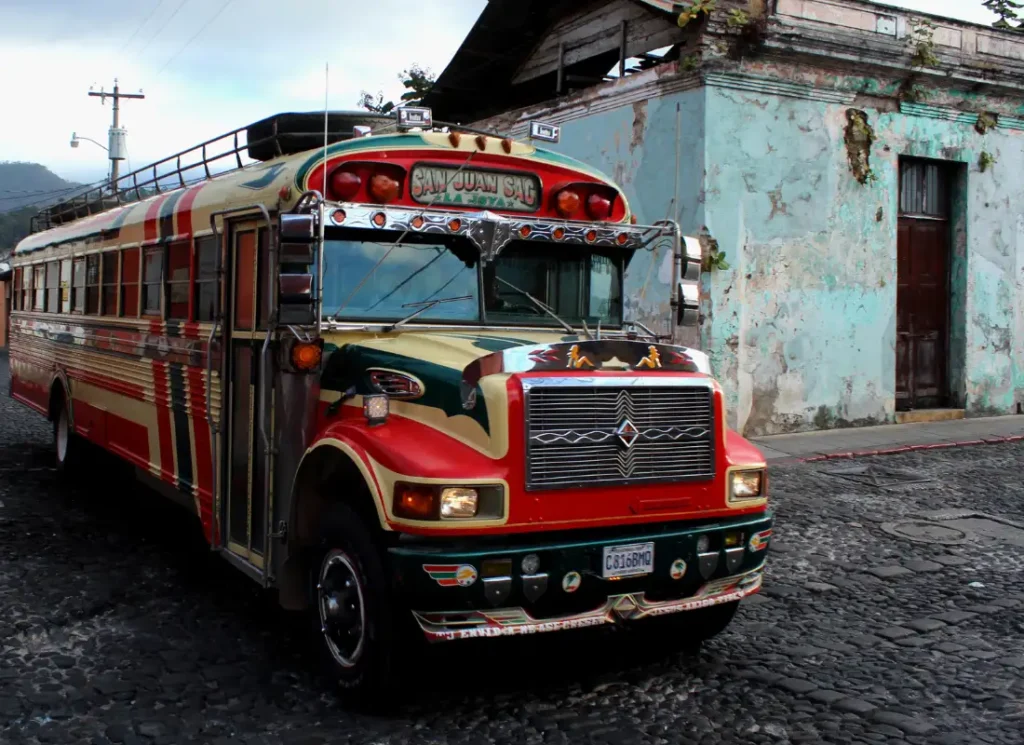
The chicken bus is the backpacker nickname for Guatemala’s public bus network, which runs on repurposed, brightly decorated old American school buses. They are the cheapest form of public transportation in Guatemala, they run frequently, and taking one is a genuine travel experience in itself. They are also louder, more cramped, and on certain routes carry a higher risk of petty theft.
I took the chicken bus from Antigua to Lake Atitlan with my friend Ellie and it was one of the highlights of the trip, even though we accidentally ended up on four buses instead of two. If you want to try it, ask your accommodation which routes are generally safe for tourists, take plenty of Guatemalan Quetzals in small bills, keep valuables on your person (not in your bag), and if they offer to strap your big rucksack to the roof, take anything you really care about out of it first.
Boats (Lake Atitlan)
Around Lake Atitlan, boats are the primary and often only way to get between towns. They are cheap, run frequently during the day, and are one of the safest and most enjoyable forms of transport in Guatemala. Just do not leave it too late: the last boats run in the early evening, and it’s not always possible to find last minute accommodation if you find yourself stranded in the wrong town.
Taxis
Taxis are available in Guatemala City and larger towns. Book through your accommodation; NEVER flag one down on the street, especially in the capital. The officially licensed airport taxis at Guatemala City Airport are safe to use. It is not guaranteed that your taxi driver will speak English, but they are generally helpful in getting you where you need to go.
When to Visit Guatemala: Weather and Seasons
Dry season (November to April)
This is peak season, and the best time to travel to Guatemala for most visitors. The weather is sunny, the roads are easier, and visibility for hikes like Acatenango is at its best. January and February are the sweet spot: reliably dry, not too hot, and slightly quieter than December and March.
Rainy season (May to October)
The wet season does not mean it rains all day. Rainfall in Guatemala typically comes in heavy bursts, often in the afternoons, leaving mornings clear and the landscape lush and green. Accommodation is cheaper, crowds are smaller, and it is still very much worth visiting. Be aware that roads to more remote areas like Semuc Champey can become difficult during heavy rain.
Holy Week / Semana Santa (March or April)
One of the most spectacular times to be in Antigua. The city fills with elaborate processions, intricately decorated street carpets made from coloured sawdust, and a genuinely festive atmosphere. It is also the busiest and most expensive week of the year, so book accommodation well in advance.
📅 Find my full guide to holidays and festivals in Guatemala here
Because Guatemala sits close to the equator, daylight hours stay fairly consistent year-round. Sunrise is between 5:30 and 6:30am, sunset between 5:45 and 6:30pm, giving you eleven to thirteen hours of daylight most of the year.

Guatemala Budget: How Much Does a Trip Cost?
Guatemala is one of the most affordable destinations in Latin America, and you’ll generally find things are very affordable compared to Europe or North America which can make for a more immersive travel experience.
Rough daily budgets for Guatemala
- Budget backpacker (dorm, street food, public transport): $25 to $40 per day
- Mid-range traveller (private room, restaurant meals, shuttle buses): $50 to $80 per day
- Comfort traveller (nicer hotels, tours, taxis): $100 and up per day
Sample costs in Guatemala
- Hostel dorm: $8 to $16 per night
- Mid-range private room: $26 to $58 per night
- Street food meal: $2.50 to $6.50
- Restaurant meal: $10 to $26
- Tourist shuttle Antigua to Panajachel: $15 to $23
- Acatenango Hike (tour): $32 to $65 depending on operator
- Public boat between Lake Atitlan towns: $1 to $3
- Chicken bus fare: $1 to $10 depending on distance
Money tips for Guatemala
Cash is essential in Guatemala. Most local transport, street food vendors, market stalls, and smaller shops do not take card. ATMs are available in cities and tourist areas. The Bi (blue) ATMs charge around 20 to 25 GTQ per withdrawal, which is much more reasonable than the 5B (yellow) ATMs, which charge around 45 GTQ. I found that paying cash was almost always cheaper than using my debit card in shops and hostels, where card fees often run between 5 and 10%.
➡️ Read the full guide to money and currency in Guatemala here
💰 Guatemala cost of living guide, updated for 2026
Food in Guatemala: What to Eat
The street food in Guatemala is excellent, especially around Antigua’s central market, and the local staples of rice, beans, plantain, and corn tortillas (thick, chewy, and completely different from Mexican tortillas) are satisfying, filling, and everywhere. Corn tortillas come with practically every meal and are one of the things I miss most about eating my way through Central America.
As a vegetarian I ate really well throughout Guatemala. So much of the cuisine is built around beans, eggs, and cheese that it was never a struggle. If you are vegan, I imagine it would be considerably more effort, but very doable in the more tourist-oriented areas.
When it comes to street food in any country, not just Guatemala, follow these basic rules:
- eat from busy stalls with high turnover
- stick to cooked food
- avoid raw fruit and vegetables (including salad) unless you are confident they have been properly washed
- skip ice in drinks (unless you can see where it’s being made)
🍲 Read more about eating & street food in Guatemala
❗️Tap water is not safe to drink in Guatemala
Is Guatemala Safe in 2026?
Guatemala is absolutely safe for tourists who travel wisely and stick to the established tourist areas. You can never be 100% secure wherever you travel, but you’re not at a hugely elevated risk in Guatemala as long as you stick to some simple safety protocols. The biggest risk for most travellers is petty theft, not violent crime.
Yes, Guatemala has a high violent crime rate by global standards, and that is worth acknowledging. But the vast majority of that crime is gang-related, concentrated in specific urban areas and rural regions away from the tourist trail, and not targeting visitors. In the places that most travellers visit, including Antigua, Lake Atitlan, and the main hiking destinations, serious violent crime is genuinely rare. I met and spoke to a lot of people throughout my time in Guatemala, and I did not hear of anyone who had experienced anything beyond minor theft.
Petty Theft and Personal Safety
Petty theft is the thing to actually prepare for. Pickpocketing happens, especially on public buses and in busy markets. I had someone’s hand literally inside my jacket pocket on a chicken bus near Chimaltenango – luckily, all they got away with was a lip balm, because my phone was in a cross-body bag. Use a bumbag or a cross-body bag you can keep in front of you, keep your phone in your front pocket (or inside the bag of course), and do not walk around with valuables visibly on display.
Walking alone at night is not recommended anywhere in Guatemala, including tourist areas. Opportunistic crime after dark is more common, and it’s not worth the risk. Stick to groups after dark and you will almost certainly be fine.
Tourist Areas vs Rural Areas
There is a well-established tourist trail in Guatemala, and sticking to it is the sensible approach, especially on a first trip. If you want to explore more remote areas or venture off the beaten track, hire a local guide. This is good for your personal safety and a good way to give back to the local economy.
Travel Insurance and Medical Care
Always travel with insurance in Guatemala; I always travel with SafetyWing travel insurance. I find the policy very comprehensive and the user experience is really nice, but I am lucky enough to never have made a claim.
In Guatemala, you’ll find a pharmacy on practically every corner, and they can handle most minor health issues (though I would Google anything prescribed before you take it). For anything more serious, go to a private hospital or clinic rather than the public healthcare system. Private medical care in Guatemala is solid but costs money, which is why having health insurance is so important.
Mosquitos, Dengue Fever, and Yellow Fever
Dengue fever is present in Guatemala, particularly in lower-altitude and coastal areas. There is no vaccine, so prevention is everything: use a good mosquito repellent, especially at dawn and dusk, and cover up in the evenings.
Yellow fever is not generally a risk in Guatemala, though it is present in some far northern jungle regions. A yellow fever vaccination certificate is required if you are arriving from a country where yellow fever is a risk, such as Brazil.
Malaria is not considered a risk in the main tourist areas.
Practical Guatemala Travel Tips
SIM Cards and Internet in Guatemala
Getting a local SIM card in Guatemala is easy and worth doing. The two main networks are Claro and Tigo, they are both widely available and there isn’t huge difference between them both. You can buy a SIM card at the airport on arrival or from phone shops in Guatemala City, Antigua, or Panajachel.
ℹ️ Most SIM cards will work in the entire CA-4 area (Guatemala, El Salvador, Honduras, and Nicaragua), so if you’re visiting those countries, double check before you buy!
Data packages are cheap and connectivity is good in all the main tourist areas. Wi-Fi is available at most hostels, cafes, and restaurants.
If you prefer not to deal with a physical SIM, eSIMs are increasingly available for Guatemala and the best part is that they can be set up before you travel.
My usual tactic is to always keep a global eSIM ready on my phone for emergencies and in-between moments, but get a local SIM as soon as convenient. This is definitely the cheapest way to do it in Latin America (although in some other regions and continents eSIMs can be the same or actually cheaper)
Languages in Guatemala
Spanish is the language you will need for almost everything in Guatemala outside maybe your accommodation. Most hostel and hotel staff speak some English, but in local shops, markets, on the buses, and in smaller towns, Spanish is what you need. Even a few key phrases make a significant difference to how interactions go. Many indigenous languages are also spoken in Guatemala, such as Kaqchikel and K’iche’, but locals are generally bilingual with Spanish. In more remote areas, they are less likely to speak Spanish.
Guatemala is also one of the best places in Latin America to learn Spanish. There are many well-established language schools in Antigua, Xela, and Lake Atitlan, offering group or one-to-one lessons at very affordable prices. A lot of people I met had originally come for a few weeks of lessons and extended their trip considerably because they enjoyed it so much.
Packing for Guatemala
What you pack depends on which part of Guatemala you are visiting and when. As a broad rule: light layers that you can add and remove, comfortable shoes for cobblestones (Antigua will destroy sandals), something warm for cooler highland nights and especially for the Acatenango hike, and decent insect repellent. A rain jacket is useful in the wet season and not entirely redundant in the dry one, to be honest… read my full packing list for Guatemala here!
Common Mistakes to Avoid in Guatemala
A few things I either did wrong or saw other travellers get caught out by:
- Not having enough small bills. Local transport, market stalls, and street food generally require exact or near-exact change in Guatemalan Quetzals. Large notes can be a bit difficult to get rid of, and it’s not possible to pay in USD everwhere.
- Underestimating the Acatenango hike. People who go underprepared have a miserable time because it’s advertised more like a tourist attraction than a real hike, but it’s harder than you’d think!
- A lot of people stay only in Panajachel and feel underwhelmed by Lake Atitlan. Much of the magic is in getting on the boats and exploring the many other towns around Lake Atitlan.
- Not getting passport stamped at land borders; don’t forget, you need a stamp on your way in and on your way out. That’s two stamps per border crossing!
- Drinking the tap water..!
- Assuming Guatemala City is worth your time as a tourist; unless you have a reason to be there, I say skip it.

Frequently Asked Questions About Guatemala Travel
Is Guatemala safe for tourists?
Guatemala is safe for tourists who stick to the established tourist trail and take basic precautions. Petty theft is the main risk. Violent crime, while statistically high nationally, is mostly concentrated in areas outside the tourist zones and is primarily gang-related. Antigua, Lake Atitlan, and the popular hiking destinations are all well-monitored areas that welcome large numbers of international visitors every year.
What is the best time to visit Guatemala?
The best time to visit Guatemala is during the dry season, from November to April. January and February offer the most reliable weather. If you are planning to hike Acatenango, the dry season also gives you the best visibility from the summit. Holy Week in Antigua (March or April) is spectacular but extremely busy, so book accommodation well in advance.
How many days do you need in Guatemala?
A minimum of two weeks covers the main highlights: Antigua, the Acatenango hike, and Lake Atitlan. Three to four weeks allows you to add Xela, the Tikal ruins near Flores, and Semuc Champey. Guatemala is the kind of place that rewards slow travel, and it is very easy to find yourself extending your stay.
What is the currency in Guatemala?
The currency is the Guatemalan Quetzal (GTQ). At the time of writing it is approximately 7.7 GTQ to 1 USD, but check rates before you travel. Cash is essential for most day-to-day spending. The Bi (blue) ATMs charge lower withdrawal fees than the 5B (yellow) ones, so seek those out when possible.
Do I need to speak Spanish to visit Guatemala?
You can get by in the main tourist areas with English, but Spanish will significantly improve your experience. Outside of accommodation, English speakers are rare in shops, markets, and on public transport. Basic Spanish phrases go a long way, and Guatemala has excellent and affordable language schools if you want to learn while you travel.
Is the street food safe in Guatemala?
Yes, with sensible precautions. Stick to freshly cooked food, avoid raw vegetables unless they have clearly been washed, and skip ice in drinks. I ate street food regularly throughout Guatemala with no problems. Read more about eating and food in Guatemala here.
Can you drink the tap water in Guatemala?
No. Tap water is not safe to drink in Guatemala. Most accommodations provide free filtered water, so bring a refillable water bottle and top up there rather than buying single-use plastic.
What are chicken buses in Guatemala?
Chicken buses are Guatemala’s public buses: repurposed and brightly painted old American school buses that criss-cross the country cheaply and frequently. They are an iconic part of travelling in Guatemala and worth trying at least once. Take care of your valuables, have small bills in local currency ready, and ask your accommodation which routes are generally fine for tourists before you set off.
What is the best way to get from Guatemala City Airport to Antigua?
The safest and easiest option is a shuttle bus or private transfer, bookable in advance online or through your Antigua accommodation. The journey takes around an hour. Do not get into unofficial taxis outside the arrivals hall. Read the full guide to getting from Guatemala City Airport to Antigua for all your options and current prices.
Can I use US dollars in Guatemala?
Some tourist-facing accommodations and shops accept US dollars, and the airport operates in dollars. In general, though, Guatemalan Quetzals make life much easier, particularly for local transport, street food, and anything outside the main tourist areas.
Is Guatemala a good destination for digital nomads?
Yes. Antigua and Lake Atitlan both have growing digital nomad communities with good Wi-Fi, coworking spaces, and a reasonable cost of living. Read this digital nomad guide to Guatemala for more detail.