

San Pedro La Laguna sits on the western shore of Lake Atitlán, and if you’re backpacking Guatemala, there’s a good chance it’s already on your list. It’s the kind of place that draws in travellers for a few nights and spits them out two weeks later, mildly sunburnt and significantly more proficient in Spanish.
It’s got a reputation as Lake Atitlán‘s party town, and whilst that’s not entirely unfair, it only really applies on weekends (and, to be honest, to one very specific hostel). The rest of the time, San Pedro is a laid-back base with great food, cheap accommodation, proper Spanish schools, a volcano you can climb before breakfast, and easy boat access to every other town on the lake.
Surprisingly, when my best friend Ellie and I visited mid-week, we found zero party. What we did find was a town with brilliant views, a great local market, and a hostel breakfast that might have been one of the highlights of the whole trip.
🇬🇹 Recommended: How to get to Lake Atitlan from Guatemala City Airport
Quick facts:
- Boats from Panajachel: ~25 quetzales (around $3), 30-40 minutes
- Hostel dorms: from around $10 per night
- Spanish lessons: from around $150-200 per week for 20 hours one-on-one
- San Pedro Volcano hike: ~$15 park entry, guide recommended
- ATMs: two in town, both charge $8-9 per transaction (use the ATM in Panajachel if you can)
Who is this guide for? Backpackers, solo travellers, Spanish language students, and anyone using San Pedro as a base to explore Lake Atitlán.
What is San Pedro La Laguna Like?
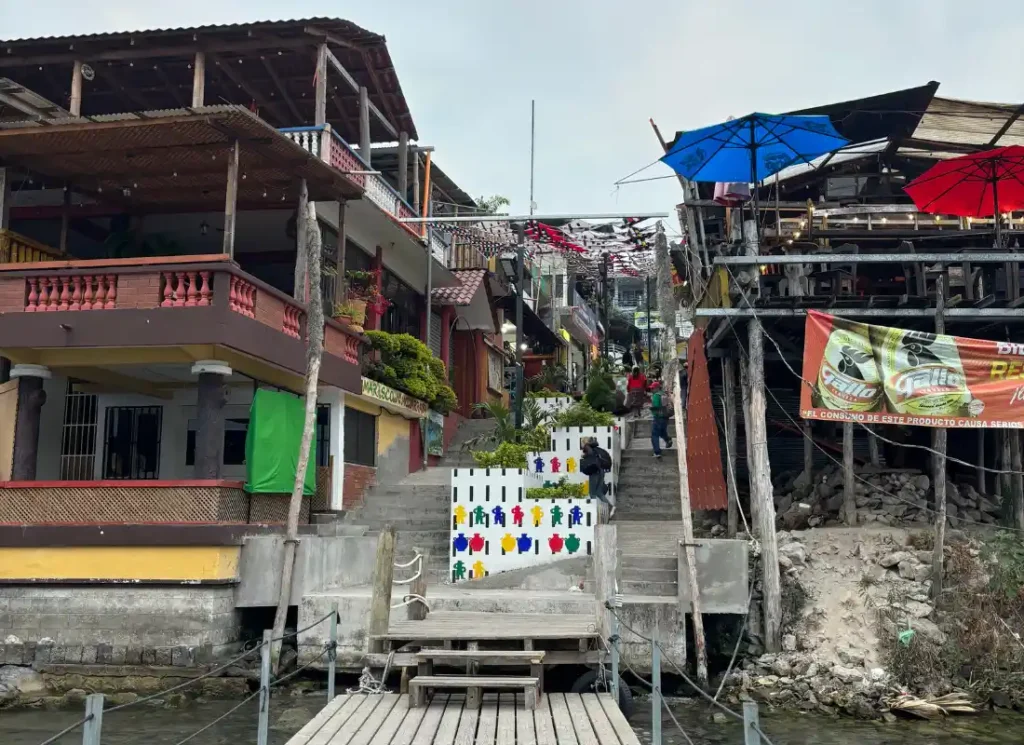
San Pedro is built on a steep hillside that climbs up from the lake, which means the town has two very distinct personalities depending on where you are. Down near the dock, you’ve got the tourist strip: cafes, restaurants, hostels, Spanish schools, and the odd hammock strung up between trees with a view of the volcano. Further up the hill, traditional Mayan life continues largely as it always has, with a busy local market and a noticeably quieter vibe.
It’s more budget-friendly than some of the other towns around Lake Atitlán, particularly compared to San Marcos, and it has more going on than anywhere else on the lake in terms of infrastructure. That said, it’s not without its quirks: the steep cobblestone streets are perfectly fine during the day and genuinely sketchy after dark, especially when it rains and they get slippery. Ellie and I had one particularly sketchy walk home one evening and ended up asking a group of (larger, male) travellers to walk with us back to the hostel. Worth bearing in mind if you’re a solo female traveller.
How to Get to San Pedro La Laguna
The best way to reach San Pedro is by boat from Panajachel. Boats (called lanchas) run regularly from around 6:30am to 5:00pm and the ride takes about 30-40 minutes. A ticket costs around 25 quetzales. Try to sit in the middle of the boat; the last stretch of the crossing can get choppy.
If you’re coming from Antigua, the route is: shuttle or chicken bus to Panajachel, then boat to San Pedro. Whatever you do, do not take the chicken bus all the way around the lake to San Pedro like Ellie and I did. That was my idea, it took about four buses and four hours, and Ellie has not let me live it down! Read the full story here…
🇬🇹 Taking the chicken bus from Antigua to Lake Atitlan
If you’re starting from Guatemala City Airport, you’ll need to get to Panajachel first and then take the boat from there.
For getting around once you’re there, tuk tuks are your best friend. They’re cheap, frequent, and will take you between San Pedro and neighbouring San Juan La Laguna for just a few quetzales.
Getting from San Pedro La Laguna to Antigua
The most common onward journey from San Pedro is back to Antigua. The easiest option is to take the boat to Panajachel and then a shuttle directly to Antigua. Shuttles typically cost 50-80 quetzales and take around 2-3 hours. You can book through your hostel the night before. This was exactly what Ellie and I did after our chicken bus adventure, and we had absolutely no regrets.
Where to Stay in San Pedro La Laguna
One thing worth knowing before you book anywhere: because San Pedro is built on a hill, where your accommodation sits on that hill matters. The lower part of town is convenient for restaurants, the dock and day-to-day life. The higher you go, the better the views and the more local the feel, but the harder the walk home after a night out.
Best Hostels in San Pedro La Laguna
The hostel scene in San Pedro is genuinely social. Most places are concentrated around the dock area and the main tourist strip, and even if you’re not staying somewhere you’re often welcome to join their activities, pool access, or evening events for a small fee.
Mr Mullet’s Party Hostel is the one you’ll have heard of, and for good reason. It has two bars, organises pub crawls and boat parties, and is pretty much the centre of San Pedro’s nightlife at the weekend. We didn’t stay here but met plenty of people who did, and they all said great things.
Hotel Amigos is where we actually stayed, and I’d recommend it without hesitation. It’s technically a hybrid hotel-hostel, and we were in the hostel part, but the standout feature is the view. Breakfast on that terrace overlooking the lake is something I still think about. Clean, well-organised, and genuinely good value.
Fe Hostel is worth looking at if you’re staying for a while. It’s popular with long-term visitors, digital nomads, and people doing Spanish courses, so it has a slightly more settled, less chaotic energy than some of the party-focused places.
Hostel dorms in San Pedro start from around $10 per night.
Mid-Range Hotels in San Pedro La Laguna
If you want a private room without spending a lot, there are several solid mid-range options. Most are in the lower part of town and offer private en-suite rooms, decent WiFi, and hot water (not always guaranteed at the budget end of things). Prices typically sit between $25-50 per night.
Hotel Peneleu is clean and comfortable with reliable WiFi, which matters if you’re working remotely.
Hotel Playa Linda is right on the lake and has its own private dock, which is a lovely touch if you want easy water access.
Upscale Hotels in San Pedro La Laguna
San Pedro isn’t really a luxury destination, but there are a few higher-end options if you want something a step above the rest. These tend to be on the lakefront or higher up the hillside where they can take full advantage of the panoramic views.
Hotel Mikaso has a rooftop restaurant with incredible views and is a step up in terms of finish and service.
Sababa Resort & Hotel is the closest thing to a proper resort in San Pedro, with good service and comfortable rooms.
Hotel Casa Alicia is a nice middle ground if you want traditional character with more modern amenities. Budget for $75-150 per night at this level.
Spanish School Accommodation
If you’re coming to San Pedro specifically to learn Spanish, many schools can arrange accommodation as part of your package, either in a homestay with a local family or in a dorm with other students. This tends to be the most affordable option and, honestly, the most immersive. Living with a Guatemalan family or alongside classmates who don’t share your native language forces you to actually use your Spanish in a way that classroom time alone never will.
Just be prepared: Guatemalan families tend to start their day at sunrise.
The most established schools with vetted homestays include San Pedro Spanish School, Orbita Spanish School, and Corazon Maya Spanish School. Homestay packages typically cost $10-20 per night including meals.
🇬🇹 Not sold on San Pedro? Here’s my full guide to choosing where to stay at Lake Atitlan!
Things to Do in San Pedro La Laguna
There’s maybe a day’s worth of things to do in San Pedro itself, but that’s true of most towns around Lake Atitlán. The real draw is using it as a base: you’re a short boat ride from San Marcos, San Juan, Santa Cruz and several other villages, each with a completely different feel. There are so many things to do at Lake Atitlan, you could spend weeks there and still not get through it all!
Climb Volcán San Pedro
The San Pedro Volcano towers over the town and is one of the more challenging but rewarding hikes around Lake Atitlán. The round trip is about 7km with an elevation gain of 1,300m, so it’s no walk in the park. Most people take 4-5 hours to get up and 2-3 hours to come back down. There are no resupply points on the trail, so take everything you need: food, water, layers for the top.
Park entry costs around $15. Although you can do the hike independently, it’s really advisable to go with a licensed local guide. Robberies on this trail are well-documented and tourists, both solo and in groups, are a target. With a guide you’re quite safe.
The best time to set off is around 6am: you’ll complete most of the climb before it gets too hot, and the views from the top are much clearer in the morning. The dry season (November to April) gives you the most reliable conditions.
Take Spanish Lessons
San Pedro is one of the best places in all of Guatemala to study Spanish, and the schools here are some of the most affordable you’ll find. One-on-one lessons typically cost $150-200 per week for around 20 hours of instruction, and most schools layer in cultural activities, conversation socials, and optional homestays on top of that.
Even if you’re only passing through for a few days, a handful of lessons is worth it. Your Spanish will be genuinely useful for the rest of your trip through Central America.
Explore the Local Market
The market up in the higher part of town is one of the best things about San Pedro, and it’s easy to miss if you stay down by the lake the whole time. This is where locals actually shop, not where they sell things to tourists, which makes it feel very different from the souvenir stalls near the dock. You’ll find fresh produce, traditional foods, and handmade crafts at prices that are still reasonable, although they’ve crept up over the years as tourism has grown. Go on a weekend if you can, when vendors from surrounding villages come in to trade and the atmosphere is at its best.
Visit the Coffee Farms
The volcanic slopes around San Pedro sit at exactly the right altitude for growing coffee, and several local farms offer tours that take you through the whole process from bean to cup. Most include a tasting at the end. If you’ve been drinking coffee throughout your time in Guatemala and haven’t yet stopped to ask where it comes from, this is a nice way to close that loop.
Take a Traditional Cooking Class
A handful of cooking schools in San Pedro offer hands-on classes in traditional Guatemalan cooking. Most start with a trip to the local market to pick up ingredients, which is a great way to see both the market and learn something useful at the same time. You’ll typically make dishes like pepián, chiles rellenos or tamales. Check what’s included before you book, as the format varies between schools.
Go Kayaking on the Lake
Renting a kayak is one of the more underrated things to do in San Pedro. You can hire one by the hour and explore the shoreline at your own pace, or join a guided tour that takes you to hidden beaches and cliff jumping spots. Early morning is the best time to go, when the water is at its calmest. A note if you have any anxiety about open water: Lake Atitlán is the deepest lake in Central America, so it can feel quite vast from a kayak.
Take a Yoga Class
San Pedro is quieter on the wellness front than San Marcos (which is full of retreat centres and incense), but there are a few yoga studios in town offering classes throughout the day. Several have views over the lake, which makes the whole thing considerably more enjoyable.
Join the Nightlife at Mr Mullet’s
If you’re in San Pedro on a weekend, it would be a shame not to lean into the nightlife at least a little. Mr Mullet’s runs pub crawls and boat parties, and you don’t have to be staying there to join in, although you’ll need to pay for activities separately if you’re not a guest. My honest advice: if you’re based somewhere else around the lake (Panajachel or San Juan, say), come to San Pedro for one weekend night specifically for the nightlife, rather than staying there for several nights expecting it to be non-stop.
Take a Tuk Tuk to San Juan
San Juan La Laguna is San Pedro’s immediate neighbour, just a short tuk tuk ride away, and the contrast between the two towns is interesting. Where San Pedro is buzzy and backpacker-facing, San Juan is quieter, more artsy, and considerably less commercial. It’s known for its women’s weaving cooperatives, natural dye workshops, and murals. A tuk tuk there costs just a few quetzales and you can easily fill a half day.
A Note on ATMs
There are two ATMs in San Pedro, both run by Banco 5B, which is the most expensive cash machine network in Guatemala. When we were there, they were charging $8-9 per withdrawal. It adds up fast. There’s a cheaper ATM in Panajachel, which is just a boat ride away, so if you can plan ahead and take out what you need before you arrive in San Pedro, do that.
[INTERNAL LINK SUGGESTION: Link “Panajachel” to your Panajachel travel guide, and consider a contextual link to your “Guide to Money in Guatemala” here.]
How Long to Stay in San Pedro La Laguna
If you’re just passing through to see Lake Atitlán, 3-4 days is enough to get a real feel for San Pedro and tick off the main activities. If you’re studying Spanish or working remotely, most people find that at least a week is the sweet spot, giving you time to settle into the rhythm of the place. Many travellers end up extending their stays here, which should tell you something.
San Pedro La Laguna FAQs
Is San Pedro La Laguna safe?
San Pedro is generally safe for tourists in the main areas near the lake. Take normal precautions with your valuables, especially in crowded spots. The steep streets can feel unsafe after dark and are genuinely slippery in the rainy season, so walk with others at night if you can. Volcán San Pedro should always be hiked with a licensed guide due to reported robberies on the trail.
How do I get from Panajachel to San Pedro La Laguna?
Take a public lancha (boat) from the dock in Panajachel. Boats run from around 6:30am to 5:00pm, the journey takes 30-40 minutes, and tickets cost around 25 quetzales (roughly $3). Sit in the middle of the boat if you can.
How much do Spanish lessons cost in San Pedro?
Typically $150-200 per week for 20 hours of one-on-one tuition. Many schools include cultural activities and can arrange homestay accommodation as part of a package.
What is San Pedro La Laguna known for?
It’s best known as Lake Atitlán’s backpacker hub, particularly for Spanish schools, the San Pedro Volcano hike, and weekend nightlife at Mr Mullet’s Party Hostel. It’s also one of the more affordable places to stay around the lake.
When is the best time to climb Volcán San Pedro?
Set off around 6am, ideally during the dry season between November and April. The early start keeps you ahead of the heat and gives you the best chance of clear views from the summit.
Related Posts
If you’re planning a trip to Lake Atitlán, here’s what to read next:
- What to Pack for Backpacking in Guatemala
- A Guide to Money in Guatemala
- Things to Do in Lake Atitlán
- 15 Best Things to Do in Panajachel
- How to Take the Chicken Bus from Antigua to Lake Atitlán
