

One of the things I love about Central America is that it’s a region of small towns and big characters. Sprawling metropolises aren’t really the point here, and the tourist trail tends to avoid the large cities for good reason. But if you’re thinking about where to base yourself, planning a longer trip, or just trying to figure out which cities are worth visiting and which to skip, safety data becomes genuinely useful.
I put this guide together using Numbeo’s crime and safety index, which is one of the most comprehensive crowd-sourced databases for this kind of thing. I’ve focused on cities with a population of over 200,000, which means some popular tourist spots like Antigua, Guatemala, and Granada, Nicaragua, aren’t included here (though you can find that kind of local safety info pretty easily online, or in my individual destination guides).
A quick note on Mexico: You’ll notice I’ve included some Mexican cities in this guide. Mexico is geographically part of North America, but when it comes to travel culture, backpacker routes, and expat life, it’s very much part of the same conversation as Central America. Numbeo also groups Mexican cities under Central America in its regional rankings.
You’ll also notice that El Salvador barely features on the dangerous list anymore, which would have been unthinkable five years ago. There’s a lot to say about that, but I’ll get into it below.
Quick facts:
- Source: Numbeo Crime and Safety Index (2025/current data)
- Cities included: population 200,000+
- Safety index: higher = safer (out of 100)
- Central America’s safest country overall in 2025: Panama (Safety index 57.3)
- Central America’s most dangerous country overall: Honduras (Safety index 28.0)
🌎 Related reading: If you’re planning a trip or move to Central America, take a look at my guide to budgeting for Latin America, which contains tonnes more information!
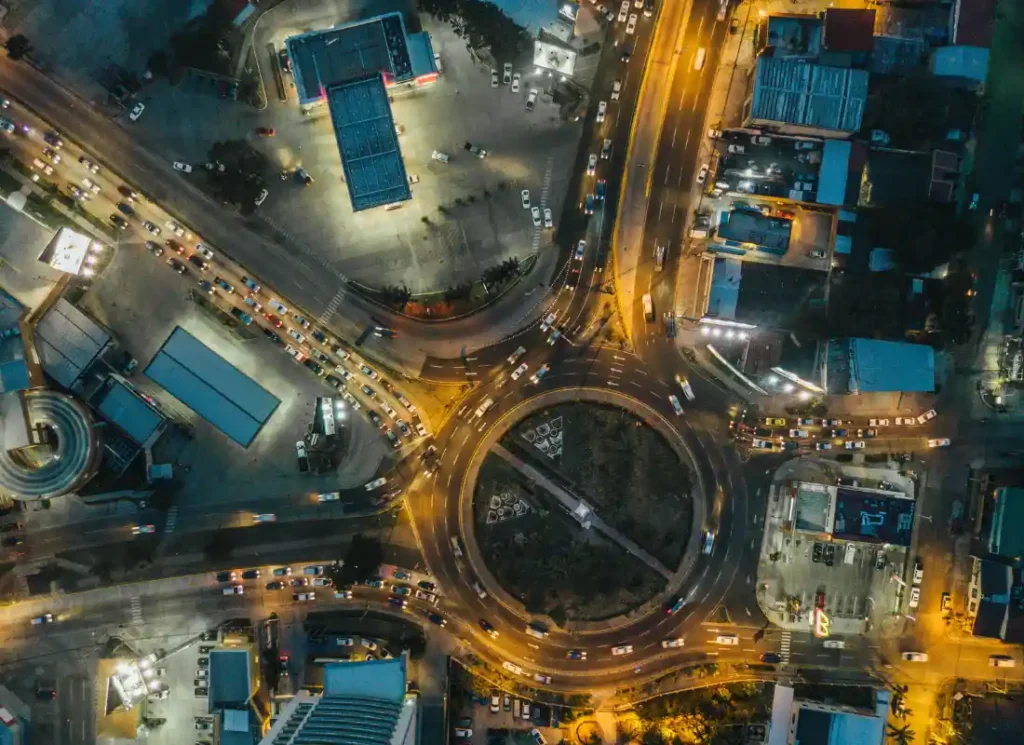
The 7 Safest Cities in Central America (2026)
1. Mérida, Mexico (Safety Index: 76.2)
If you’re open to including Mexico in your search, Mérida tops the list by a considerable margin. The capital of the Yucatán state is not only one of the safest large cities in this entire region but one of the most liveable cities in Latin America full stop. It’s become a serious hub for digital nomads and expats in recent years, and it has a rich cultural scene, excellent food, and a relatively low cost of living. It sits well apart from the violence that affects other parts of Mexico, and its safety index of 76.2 puts it in a category of its own compared to the rest of the region.
2. Puerto Vallarta, Mexico (Safety Index: 65.1)
Another Mexican city, and the place I started my first ever backpacking trip in 2020, Puerto Vallarta punches well above its weight when it comes to safety relative to the region. It’s primarily known as a beach resort town, so it’s probably more relevant to travellers than people looking for a city base, but its safety score of 65.1 is genuinely impressive.
3. Querétaro, Mexico (Safety Index: 62.2)
Querétaro, in central Mexico, is another city that surprises people with how safe it is. It has a UNESCO-listed historic centre, a growing tech sector, and a quality of life that regularly sees it topping Mexican city rankings. Safety index of 62.2.
4. Panama City, Panama (Safety Index: 52.9)
If we’re talking strictly about Central America (no Mexico), Panama City is the winner. The capital city has a safety index of 52.9, putting it well ahead of most of its neighbours. It’s not without its rough areas, but as a whole, it’s the most functional and safest large capital city in the region. It’s also the most developed, with a strong infrastructure, good healthcare, and a large expat community. If you’re considering Central America for living, Panama is genuinely worth looking at first.
Related reading: Where to stay in Panama City for neighbourhood-by-neighbourhood safety breakdowns.
5. Alajuela, Costa Rica (Safety Index: 53.5)
Alajuela sits in Costa Rica’s central valley, just outside San José, and consistently scores as one of the safer cities in the region. Costa Rica as a country has a strong reputation for stability, and Alajuela reflects that. It’s not a tourist destination in itself, but it’s a popular base for expats who want to be near San José without the capital’s higher crime rates.
Read more: A Guide to Costa Rica for Digital Nomads
6. San Miguelito, Panama (Safety Index: 48.0)
San Miguelito sits right next to Panama City and shares much of the same character. Its motto translates as “Land of the Good People,” which is a nice detail. It’s the fourth safest large city in Central America proper (excluding Mexico), with a safety index of 48.0.
7. Managua, Nicaragua (Safety Index: 46.6)
Managua often gets a bad reputation by association with Nicaragua’s broader political instability, but statistically it performs reasonably well on crime indices compared to some of its neighbours. It has a safety index of 46.6. Worth noting: this is specifically about street crime rather than political risk, and the political situation in Nicaragua under Ortega is a separate concern for people considering living there. For travellers passing through, it’s manageable, but I’d always recommend getting up-to-date local advice.
The 5 Most Dangerous Cities in Central America (2026)
5. San Salvador, El Salvador (Safety Index: 44.2)
This is where things get really interesting, and where the list tells an incomplete story without context.
A few years ago, San Salvador and all of El Salvador would have been near the top of the dangerous list without question. El Salvador spent years as the murder capital of the world. Under President Nayib Bukele’s government, the country declared a state of exception in 2022 and carried out mass arrests of suspected gang members, reportedly over 91,000 arrests to date. The result has been unprecidented: the homicide rate in El Salvador fell to just 0.22 per day in 2025, equivalent to about 1.36 per 100,000 people, making it the lowest in over 50 years. Source.
Officials described El Salvador as “the safest nation in the Western Hemisphere” based on 2025 figures, with 82 homicides recorded for the entire year. Tico Times
However, it comes with a BIG asterisk. Human rights organisations have raised concerns that the state of exception led to arbitrary arrests, and lengthy detentions of suspects with little or no evidence of wrongdoing. Source. For travellers, the practical experience of El Salvador is now very different to what it was five years ago, and many people are visiting who wouldn’t have considered it before. I was there in 2024 when the tourism industry in El Salvador was just beginning to boom, and I expect it will only continue to grow in coming years…
4. Guatemala City, Guatemala (Safety Index: 38.0)
Guatemala City doesn’t get a lot of tourist love, and that’s partly because of its reputation. With a safety index of 38.0, it’s not the most dangerous city on this list, but it warrants caution. The city has chaotic traffic, significant inequality, and areas you really don’t want to find yourself in after dark. That said, it has a thriving arts scene and some great neighbourhoods if you know where to look.
3. Tegucigalpa, Honduras (Safety Index: ~25.6)
Honduras remains one of the most dangerous countries in Central America by any measure, and Tegucigalpa, the capital, reflects that. San Pedro Sula and Tegucigalpa both saw around 44-50% reductions in violent events during the Castro administration in 2024, though analysts note this may partly reflect a shift in gang tactics rather than a genuine dismantling of criminal organisations. ACLED Forced disappearances reportedly rose even as homicide figures fell, which paints a more complex picture. The city can be visited, but requires serious precaution and ideally a local contact.
2. La Ceiba, Honduras (Safety Index: ~24.1)
La Ceiba is famously called the “Eco-Tourism Capital of Honduras” and hosts one of the most celebrated carnivals in the region. In theory, it has the potential to grow as a destination as tourism infrastructure develops. In practice, it consistently ranks among the most dangerous cities in Central America, and that hasn’t changed significantly. Take precautions, stay in tourist-facing areas, and don’t travel at night unless necessary.
1. San Pedro Sula, Honduras (Safety Index: 20.6)
San Pedro Sula currently has a crime index of 79.74, ranking it among the most dangerous cities in the world, though it no longer holds the “murder capital of the world” title it had for several years around 2010 to 2016. The city has seen reductions in violent events, but security experts suggest this reflects gang tactical shifts rather than a fundamental improvement in the criminal landscape. Source.
There is some tourism infrastructure here and people do pass through. The city has some genuinely nice areas. But statistically it remains the most dangerous large city in Central America, and most travellers have no strong reason to spend time there.
And, of course, don’t forget to download my guide to Central America!
Crime and Safety Data Table (2026)
Below is the current Numbeo data for large cities in the region. Note that this is a living dataset, so scores shift as new data comes in. I’ve included Mexican cities with an asterisk for reference.
Safety data table
Here is the latest data from Numbeo.
| City | Crime Index | Safety Index |
|---|---|---|
| San Pedro Sula, Honduras | 79.4 | 20.6 |
| Tijuana, Mexico* | 71.5 | 28.5 |
| Mexico City, Mexico* | 66.9 | 33.1 |
| Guadalajara, Mexico* | 62.2 | 37.8 |
| Puebla, Mexico* | 58.1 | 41.9 |
| San Salvador, El Salvador | 55.8 | 44.2 |
| San José, Costa Rica | 55.6 | 44.4 |
| Cancún, Mexico* | 55.1 | 44.9 |
| San Miguel de Allende, Mexico* | 50.4 | 49.6 |
| Monterrey, Mexico* | 48.1 | 51.9 |
| Panama City, Panama | 47.1 | 52.9 |
| Querétaro, Mexico* | 37.8 | 62.2 |
| Puerto Vallarta, Mexico* | 34.9 | 65.1 |
| Mérida, Mexico* | 23.8 | 76.2 |
*Mexican cities included for regional comparison; geographically North America.
Note: Managua, Alajuela, Guatemala City, Tegucigalpa, La Ceiba, and several other Central American cities are not included in the current Numbeo dataset, likely due to smaller sample sizes. The figures I’ve referenced for those cities above come from the 2025 historical dataset.
A Final Note on Safety and Travel
The statistics in this guide are useful context, but they’re not the whole story. Safety in any city varies enormously by neighbourhood, time of day, and how you’re travelling. San Pedro Sula has safe pockets. Panama City has areas you don’t want to walk through alone at night.
If you’re planning to travel through Central America, the most useful safety information usually comes from people already on the ground, whether that’s the staff at your hostel, local tour operators, or expat communities online. I always recommend checking the travel advisories from your own government too, as these are updated frequently and often give more specific guidance than statistics alone.
Tourism genuinely helps the economies of these countries and supports local businesses, guides, and families. If you do go, tip well, use local companies, and don’t let the statistics put you off entirely. Some of the most rewarding travel I’ve done has been in countries that look scary on paper.
If you’re planning a trip through the region, you might want to read my guides on the safest destinations for female solo travellers, my general Central America packing guide, and the money and currencies guide for Central America.
FAQs
What is the safest city in Central America?
If you’re looking strictly at Central American countries (excluding Mexico), Panama City currently ranks as the safest large city in the region based on Numbeo data, with a safety index of around 52.9. Alajuela in Costa Rica comes close. If you include Mexico, Mérida stands well above everything else in the region with a safety index of 76.2.
What is the most dangerous city in Central America?
San Pedro Sula in Honduras consistently ranks as the most dangerous large city in Central America, with a Numbeo crime index of around 79.4. Honduras as a country also has the highest crime index in the region at 72.0. That said, the city is not impossible to visit, and there are safer areas within it.
Is El Salvador safe to visit now?
The short answer is: much safer than it was. El Salvador has undergone a dramatic transformation since the 2022 state of exception, and its homicide rate is now among the lowest in the Western Hemisphere. Many travellers who wouldn’t have considered it five years ago are now visiting, and the general experience on the ground has changed significantly. That said, the political context is complex, and it’s worth reading up on the ongoing state of exception and its human rights implications before you go.
Is Costa Rica really the safest country in Central America?
By most measures, yes. Costa Rica has the most stable democracy, the strongest institutions, and the lowest political risk in the region. However, its homicide rate has been rising in recent years due to drug trafficking, reaching 17.2 per 100,000 in 2024. This violence is mostly concentrated in specific areas and doesn’t tend to affect tourist zones, but it’s worth being aware of.
Is it safe to travel in Central America as a solo female traveller?
It really depends on where you go and how you travel. I’ve done a lot of solo female travel in Central America and found it manageable with preparation and common sense. I’ve written a full guide on the safest destinations for female solo travellers if you want a more detailed breakdown.
Should I include Mexico in my Central America plans?
Absolutely, if it fits your route. Mexico is technically North American but is culturally and logistically part of the same travel circuit for most people doing this region. The Yucatán Peninsula in particular (where you’ll find Mérida, Cancún, and Tulum) connects naturally with Belize and Guatemala. Just be aware that safety varies enormously across Mexico, much more so than in the smaller Central American countries.

Liked your analysis. Quite accurate. I think the red zone on Mexican border is one that could be included in dangerous spots. I travel the world in my work and been to most places now. Some islands in Caribbean have become more dodgy also now and obviously Haiti, Trinidad and Jamaica sadly as they used to be reasonable. I am in Indonesia just now and found it a brilliant spot over the decades.
Oh that’s interesting! Are you talking about Mexico’s border with Belize, or Guatemala? Or both!?
Hi Isabella,
In my experience, I would say he is referring to the Guatemala/ Mexico border as that’s where the drugs are pouring through and it has long been dodgy. They are coming through Belize and Mexico, but that border isn’t as bad given that most of the drugs pass into Mexico first (not Belize); they are coming into Belize, but are then taken north by water as going by land adds pointless risk for the traffickers (there is one road north, and going west is jungle/ slow/ again added risk).
Having said that, Belize City isn’t one you’d be wandering around at night (other than the best areas, and even then …).
Thanks for your article.
Happy Trails!
Kind regards,
Steve