

Guatemala is one of those countries that completely takes you by surprise. I visited as part of a long overland journey through Central America, and I genuinely wasn’t prepared for how much there was to see and do: ancient Mayan ruins buried deep in the jungle, picture-perfect colonial towns ringed by volcanoes, highland lakes that look like they’ve been lifted from a fantasy novel. If you’re planning your Guatemala trip and wondering where to start, you’re in the right place.
This is my complete guide to the best things to do in Guatemala, covering everything from the top Guatemala tourist attractions to the places that most visitors never even hear about.
Quick facts about Guatemala
- Currency: Guatemalan quetzal (Q). Roughly Q8 = €1 / Q7.7 = $1
- Language: Spanish (some English spoken in tourist areas)
- Best time to visit Guatemala: November to April (dry season)
- Getting around: Tourist shuttles, chicken buses, private transfers
- Visa: Most nationalities get 90 days on arrival
🇬🇹 If you’re not sure which route to take yet, check out this guide to planning a Guatemala Itinerary
Best Things to Do in Guatemala
Things to Do in Antigua Guatemala
Antigua is where most people begin their Guatemala adventure, and for good reason. This UNESCO World Heritage city is stunning: cobblestone streets lined with pastel-coloured buildings, baroque church ruins, and cloud-scraping volcanoes visible from almost every corner. It’s one of the best-preserved Spanish colonial cities in Latin America, and small enough to explore entirely on foot.
Visit the Santa Catalina Arch
This iconic yellow arch was built in the 17th century so that nuns could cross between convents without being seen by the public. Today it frames a perfect view of Volcán de Agua in the background, and is Antigua’s most photographed landmark. Get there just after sunrise for the best light and the fewest people.
Explore the Church Ruins
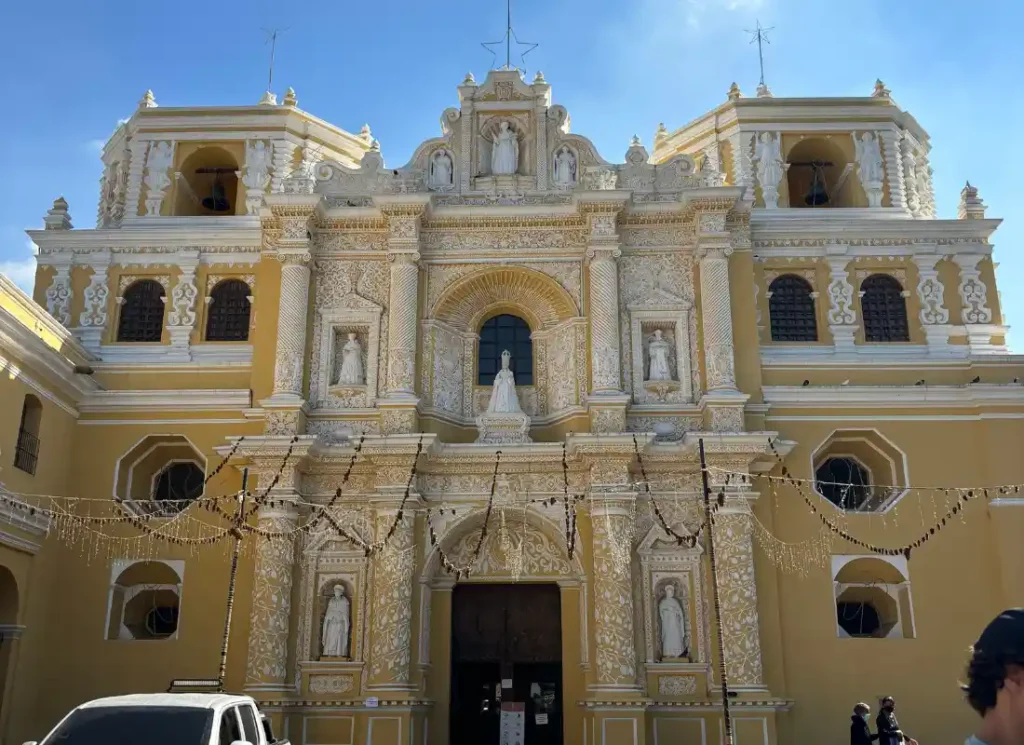
Antigua is full of beautiful church ruins, which are all reminders of the earthquakes that eventually led the capital to be moved to Guatemala City. Don’t miss the San Francisco Church, La Merced, and the atmospheric Las Capuchinas convent. Each has its own character and story, and most charge a small entrance fee of around Q10 to Q30.
Take a Chocolate Workshop
Guatemala holds the (self-proclaimed, but well-earned) title of the birthplace of chocolate. The Mayans really did give us chocolate, and Antigua is a brilliant place to learn about that history. ChocoMuseo runs everything from quick tastings to full bean-to-bar workshops.
Visit a Coffee Farm
The volcanic soil around Antigua produces some of Guatemala’s finest coffee. Filadelfia Coffee Resort and Caoba Farms both offer excellent tours, covering the growing and roasting process with detailed tastings at the end. Both are just outside the city but easy to reach and very much worth the short journey.
Take a Cooking Class
I recommend cooking classes almost everywhere I go, because I genuinely think they’re one of the best ways to get under the skin of a place. In Antigua, you can learn to make traditional Guatemalan dishes like pepián, tamales, or rellenitos, and many experiences include a market visit to buy ingredients first. Budget around $25 to $40 per person.
Hike Cerro de la Cruz
This short hike leads to a viewpoint overlooking the whole city, with Volcán de Agua as the backdrop. It takes around 20 to 30 minutes to reach the top. Go with a group or a guide rather than alone, particularly in the early morning or after dark.
Take a Free Walking Tour
Tours depart from the central park several times daily and are one of the best introductions to Antigua’s architecture and turbulent history. They are tips-based, so bring some quetzales and expect to tip well if your guide is good.
🇬🇹 Read more things to do in Antigua here
Volcano Hikes from Antigua
If there’s one category of Guatemala attractions that truly blows people away, it’s the volcano hikes. Antigua sits surrounded by three volcanoes, and hiking at least one should be near the top of any Guatemala itinerary.
Pacaya Volcano
Pacaya is the easiest and most popular of the volcano hikes from Antigua. It takes around two hours to go up and one hour down, and at the top you can roast marshmallows in the volcanic vents, which sounds ridiculous but is genuinely brilliant. It’s accessible for most fitness levels and can be booked through any tour agency in Antigua for around $15 to $25 including transport.
Acatenango Volcano (The Unmissable One)
Acatenango is the big one. This is one of the best things I have ever done in my entire life, and I don’t say that lightly. It’s a challenging overnight hike, but watching Volcán de Fuego erupt from your campsite at night is an experience you simply cannot replicate anywhere else. The eruptions light up the sky every 20 minutes or so, and the silence between them makes it feel almost theatrical.
Book with a reputable company and rent proper warm gear: it gets bitterly cold up there. Tours typically cost $35 to $60 and include transport, a guide, meals, and basic camping equipment.
Things to Do at Lake Atitlán
Lake Atitlán is the deepest lake in Central America, with estimated depths of around 340 metres (parts of which have never been fully explored), and it’s ringed by dramatic volcanic peaks and Mayan villages that each have their own completely distinct personality.
What makes Lake Atitlán so special is the variety. Hopping between the villages by public boat, called a lancha, is half the experience in itself. A short ride between villages costs just Q5 to Q15, and boats run regularly throughout the day.
Take a Boat Tour
The best way to get your bearings is a boat trip around the lake on your first day. You can take public lanchas between villages or hire a private boat to go exactly where you want. It’s especially useful if you’re short on time and trying to decide which towns to base yourself in.
Climb Volcán San Pedro
You can hike Volcán San Pedro and be back the same day, which sets it apart from Acatenango. It’s a challenging climb, but the views over Lake Atitlán from the top are worth every step. I’d strongly recommend going with a guide: the routes are quite secluded, and tourists have been targeted on solo hikes in the past. Tours depart from San Pedro La Laguna and typically cost around $10 to $20.
Visit the Weaving Cooperatives in San Juan
San Juan La Laguna is the artisanal heart of the lake, and visiting the weaving cooperatives here is one of the most culturally rich things to do in Guatemala. Local women demonstrate how fabrics are dyed using natural plants and woven into traditional textiles on backstrap looms. It’s free to walk in, and buying directly from the cooperatives means the money goes straight to the artisans.
Take a Yoga Class in San Marcos
San Marcos La Laguna is Guatemala’s unofficial yoga capital. Multiple studios offer drop-in classes throughout the day, many with views over the water. Prices are slightly higher than the rest of the lake (probably because of the laid-back, spiritual vibe that attracts a certain crowd), but a drop-in class typically costs around $8 to $15.
Go Scuba Diving at Santa Cruz
Santa Cruz La Laguna is the main hub for scuba diving on the lake, and diving here is genuinely unlike anything else. The high altitude creates a unique experience, and you can see underwater volcanic formations and hydrothermal vents. ATI Divers is the go-to operator. One fun dive costs around $35 to $50.
Go Kayaking or Paddleboarding
Available from several towns around the lake, this is one of the most peaceful ways to spend a morning on Lake Atitlán. Early mornings are particularly beautiful when the water is glassy and still. Kayak rentals typically cost around Q25 to Q50 per hour.
Visit the Cerro Tzankujil Nature Reserve in San Marcos
This small nature reserve has well-maintained trails, viewpoint platforms, and a famous cliff jumping platform. Even if the jump isn’t for you (I swerved it too), the views are worth the walk.
Places to Visit in Guatemala Beyond Antigua and Lake Atitlán
Here’s where to go if you have the time to explore further than the two most visited places in Guatemala.
Things to Do in Guatemala City
Guatemala City gets a tough reputation, and I won’t pretend that’s entirely undeserved. It’s one of the more challenging cities to navigate as a tourist in Central America, and most visitors (myself included) don’t recommend spending a lot of time here, especially solo. The safest areas to base yourself are Zones 9, 10, and 13.
That said, if you find yourself with a day or two in the capital, there are some genuinely worthwhile places to visit in Guatemala City. The National Museum of Archaeology and Ethnology holds the country’s largest collection of Mayan artefacts. The Popol Vuh Museum in Zone 10 is impressive for a private collection, with strong pre-Columbian and colonial pieces. The Palacio Nacional de la Cultura offers guided tours that give fascinating insight into Guatemala’s political history. And Zona 4 has transformed in recent years into a hub of street art, independent cafes, and restaurants.
A food tour is a particularly good option in Guatemala City: the food scene is more diverse than you’d expect, and it’s a social and relatively safe way to explore. Most visitors can cover the main attractions in one to two days.
🇬🇹 Read more things to do in Guatemala City here
Tikal: Guatemala’s Most Famous Mayan Ruins
No guide to places to visit in Guatemala would be complete without Tikal. Tucked deep in the northern jungle of the Petén region, Tikal National Park is one of the largest and most significant ancient Mayan cities ever discovered, and walking through it is one of the most genuinely awe-inspiring experiences in all of Central America.
Tikal is also the only place in Guatemala where you can reliably spot howler monkeys, spider monkeys, and toucans in the wild, which adds a whole other dimension to the visit.
You can visit as a full day trip from Flores (about an hour away), or stay within the national park itself to see sunrise over the temples, which I’ve heard described as one of the best travel experiences in the world. Entrance to the park costs around Q150 (roughly €17 / $19) for international visitors.
Flores: The Charming Island Town
Flores is a small, impossibly pretty town on an island in the middle of Lake Petén Itzá in the far north of Guatemala, connected to the mainland by a short causeway. You can walk the entire perimeter of the island in about 15 minutes. What it lacks in size it more than makes up for in character: narrow cobblestone streets, brightly coloured buildings, and an incredibly laid-back pace of life.
Flores is the most common base for visiting Tikal, but the town deserves more than a single night’s stopover. You can swim or kayak on the lake, take a sunset boat ride (the light on the water as the sun goes down is something else), wander the colonial streets, and visit the small Museo Santa Bárbara for some Mayan context before you head to the ruins.
Semuc Champey: Guatemala’s Most Spectacular Natural Wonder
Semuc Champey is a national monument in the Alta Verapaz region where a natural limestone bridge spans the Cahabón River, and on top of that bridge sit a series of cascading turquoise pools that stretch for about 300 metres through the jungle. The water is as impossibly blue as the photos suggest. While you swim, the river actually flows underneath you through limestone caves. It’s the kind of place that sounds made up.
Getting there is part of the adventure. Most people base themselves in Lanquín and take a 4×4 the rest of the way. Journey times from Antigua are long (around eight to ten hours), so plan to stay at least two to three nights to make the trip worthwhile. Alongside the pools, you can hike up to the El Mirador viewpoint, explore the Kan’Ba caves by candlelight, or go river tubing.
Xela (Quetzaltenango): Guatemala’s Best-Kept Secret
Xela (short for Quetzaltenango, pronounced SHAY-la) is Guatemala’s second-largest city and one of its most underrated. The name is an adaptation of the ancient Mayan name Xelaju, and once you’ve spent a few days there you’ll understand why nobody bothers with the full version.
It has a completely different energy from Antigua or Lake Atitlán: much more authentic, far fewer tourists, and a lively student atmosphere fuelled by all the Spanish language learners who base themselves here. It’s one of the most affordable places to study Spanish in all of Central America, which draws an interesting mix of long-term travellers, expats, and Guatemalans from across the country.
The combination of colonial architecture, vibrant indigenous markets, nearby hot springs at Fuentes Georginas (absolutely magical), and hiking on Santa María Volcano makes Xela a brilliant destination if you want to experience Guatemala away from the tourist trail. And don’t leave without trying the local tacos: they’re rolled and fried, more like taquitos than Mexican tacos, and the best ones are sold at street stands in the evening.
Rio Dulce: Guatemala’s Caribbean Gateway
Rio Dulce is worth knowing about if you want a very different side of Guatemala. The town sits on the river of the same name and acts as the gateway to a stunning stretch of waterway where the river cuts through towering limestone cliffs draped in jungle. The whole feel is much more Caribbean than highland Guatemala, and it makes for a brilliant contrast after a few weeks in Antigua or around the lake.
Most people visit on a day trip from nearby Lake Izabal, but you can stay in Rio Dulce itself if you want time to explore the river and jungle properly by boat.
How to Get Around Guatemala
The main ways to travel between destinations in Guatemala are tourist shuttles, chicken buses, and private transfers.
Tourist shuttles are the most popular choice for most backpackers. They’re comfortable, door-to-door, and easy to book through your accommodation. Chicken buses (the repurposed, repainted American school buses you’ll see everywhere) are the cheapest option and an experience in themselves: loud, crowded, chaotic, and genuinely brilliant if you’re up for it.
Is Guatemala Safe for Tourists?
Safety in Guatemala really does depend on where you go and how you travel. Antigua is generally considered one of the safest cities for tourists. Lake Atitlán is relatively safe, though standard precautions apply: avoid hiking alone, take taxis rather than walking at night, and ask your accommodation for local advice. Guatemala City requires extra care, and it’s best explored with a guide or in a group, but Guatemala City airport is perfectly safe.
Always check current travel advice from your government before visiting.
FAQs About Things to Do in Guatemala
Is Guatemala worth visiting?
Absolutely. Guatemala is one of the most diverse and rewarding destinations in Central America. Between the colonial architecture of Antigua, the volcanic landscapes, the living Mayan culture around Lake Atitlán, and natural wonders like Semuc Champey and Tikal, there’s something here for almost every kind of traveller. It’s also one of the most affordable countries in the region.
How long do you need in Guatemala?
Most travellers spend two to four weeks to cover the main highlights: Antigua, Lake Atitlán, Flores and Tikal, and perhaps Semuc Champey or Xela. If you want to explore more deeply, study Spanish, or volunteer, a month or more is easy to fill.
What is the best time to visit Guatemala?
The dry season from November to April is the best time to visit, particularly for outdoor activities, volcano hikes, and clear views. December and January tend to have especially clear skies and comfortable temperatures. That said, Guatemala is worth visiting year-round. During the rainy season from May to October, mornings are usually clear and the landscape is lush and incredibly green.
How do you get around Guatemala?
Tourist shuttles are the most popular option between major destinations and are comfortable and easy to book through your hostel or hotel. Chicken buses are the cheapest option and a genuine experience, though they’re slower and require more navigation. Private transfers offer the most flexibility.
What currency does Guatemala use?
Guatemala uses the Guatemalan quetzal (Q). At the time of writing, Q8 is roughly equivalent to €1, and Q7.70 is roughly $1. Cash is important in smaller towns: Santa Cruz La Laguna, for example, has no ATMs, so always carry enough with you before you head out on the water.
Do I need to speak Spanish to travel in Guatemala?
It helps, but it’s not essential for the main tourist trail. Staff at accommodation, tour operators, and restaurants in tourist areas will often speak some English. On public transport, in local markets, and in smaller towns, Spanish is much more useful. Many travellers use their time in Guatemala, particularly in Xela or Antigua, to take Spanish classes.
What are the must-see Guatemala tourist attractions?
The absolute highlights are Antigua’s colonial architecture and volcano hikes, Lake Atitlán and its surrounding Mayan villages, Tikal National Park, and Semuc Champey. For off-the-beaten-path experiences, Xela and Rio Dulce are both well worth the extra effort.
