

Salamanca doesn’t get the hype it deserves. Most visitors to Spain head straight for Madrid, Barcelona, or Seville, and Salamanca sits just two hours from Madrid, quietly being one of the most beautiful cities in the country.
I went to meet my parents in Salamanca for a long weekend and, honestly? I was not expecting to be as impressed as I was. The city is a UNESCO World Heritage Site built almost entirely from golden sandstone, which gives it this warm, glowing quality, especially in the evening light. It’s known primarily as a university town, but there’s so much more to it than student life. Romanesque cloisters, baroque architecture, 12th-century cathedrals, renaissance palaces, and some of the most ornate sandstone architecture I’ve ever seen.
Everything is close together and easy to walk between. Entry prices are genuinely reasonable (usually 3 to 5 euros). And it’s calm in a way that Madrid never quite is.
📍 If you don’t have much time in your Spain itinerary, you can take a day trip to Salamanca from Madrid
Here’s everything worth doing in Salamanca, plus where to eat and some practical tips to help you plan your visit.
➡️ Use Booking.com to find your accommodation in Salamanca
*this article contains affiliate links
Quick Facts: Salamanca at a Glance
- Best for: Culture, history, architecture, weekend trips from Madrid
- How long to spend: 2 to 3 days is ideal; doable as a day trip but you’ll be rushing
- Getting there: Train from Madrid (1.5 to 2 hours) or bus (around 2.5 hours)
- Average entry prices: 3 to 5 euros for most attractions; a few up to 9.50 euros
- Walkability: Very high. Almost everything is within 20 minutes on foot
- Best time to visit: Spring and autumn for mild weather; summer is hot but lively with students
(And a Note on Prices)
Almost everything in Salamanca is very reasonably priced for entry, generally between 3 and 5 euros per person. The Palacio de Monterrey is the main exception at 9.50 euros, and I’ll note where things are free. Budget around 15 to 25 euros per person for a full day of sightseeing, not including food and drink.
17 Things to Do in Salamanca
1. Plaza Mayor
Plaza Mayor is the beating heart of Salamanca and the obvious starting point. My dad’s friend, who has seen more squares in Spain than most people see in a lifetime, called it one of the most beautiful in the country, and I’m inclined to agree.
It’s enormous, ornate, and lined with tapas bars that somehow still feel more Spanish than touristy, despite the prices. The real magic is at night, when the buildings are lit up and the whole square takes on a golden glow. Even if you just sit with a drink and take it in, it’s absolutely worth it. It’s the classic meeting place in Salamanca, and you’ll pass through it multiple times a day without minding at all.
2. Ieronimus Tower (the best value thing you can do in Salamanca)
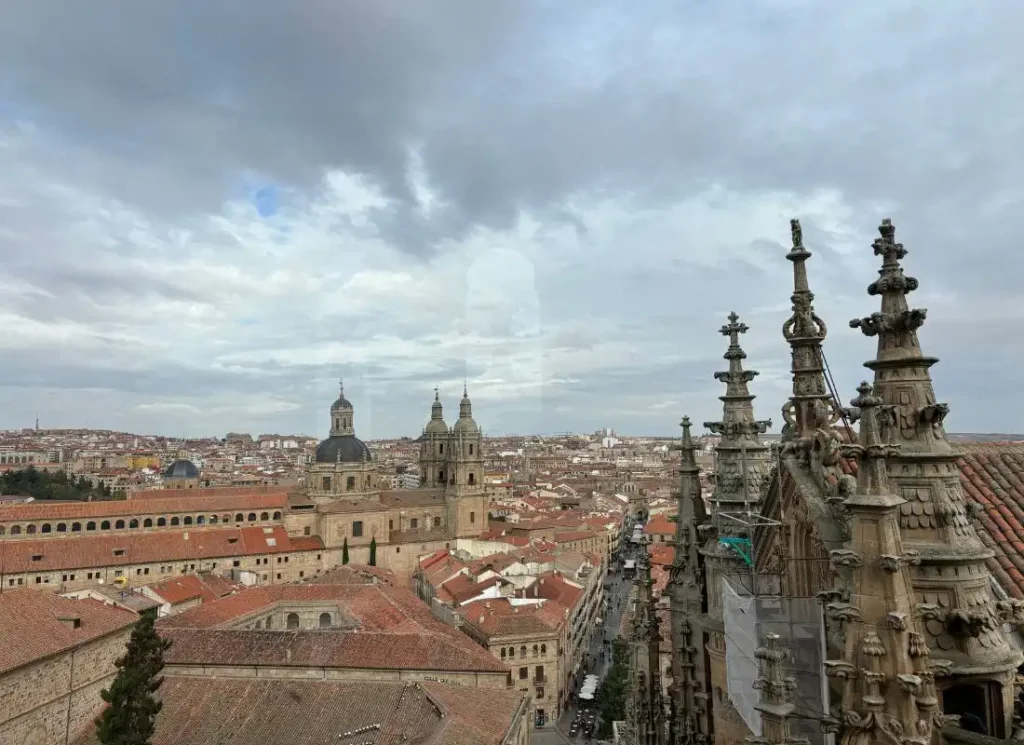
If you only do one thing in Salamanca, make it the Ieronimus Tower. At just 4 euros per person, it gives you the best return of anything in the city. It takes you up through both cathedrals via their balcony seats (which are as stunning as the cathedrals themselves) and up to the top of the bell tower sandwiched between them, where the views over the city are genuinely spectacular.
The staircase is steep and very narrow, so the whole route operates on a traffic light system, one direction at a time, which was one of those quirky little details that made me love it even more. There’s a lot of great historical information throughout, but fair warning: it’s only in Spanish. There’s a QR code to read it in English, but there’s no signal inside and the wifi didn’t work for us either. Worth downloading something offline in advance if the history really matters to you.
3. The Cathedrals of Salamanca (Old and New)
Salamanca has two cathedrals, which sit right next to each other and are connected internally. The Old Cathedral (Catedral Vieja) dates back to the 12th century and is the more historically significant of the two; the New Cathedral (Catedral Nueva) was built in the 16th century and is arguably the more visually dramatic, with its elaborate baroque and gothic facade and intricate carvings covering almost every surface.
You can pay separately to enter both, but my honest take: unless you’re visiting for religious reasons, the Ieronimus Tower gives you the best views of both interiors without needing to pay again. The exteriors alone are worth spending real time on.
4. The Roman Bridge (Puente Romano)
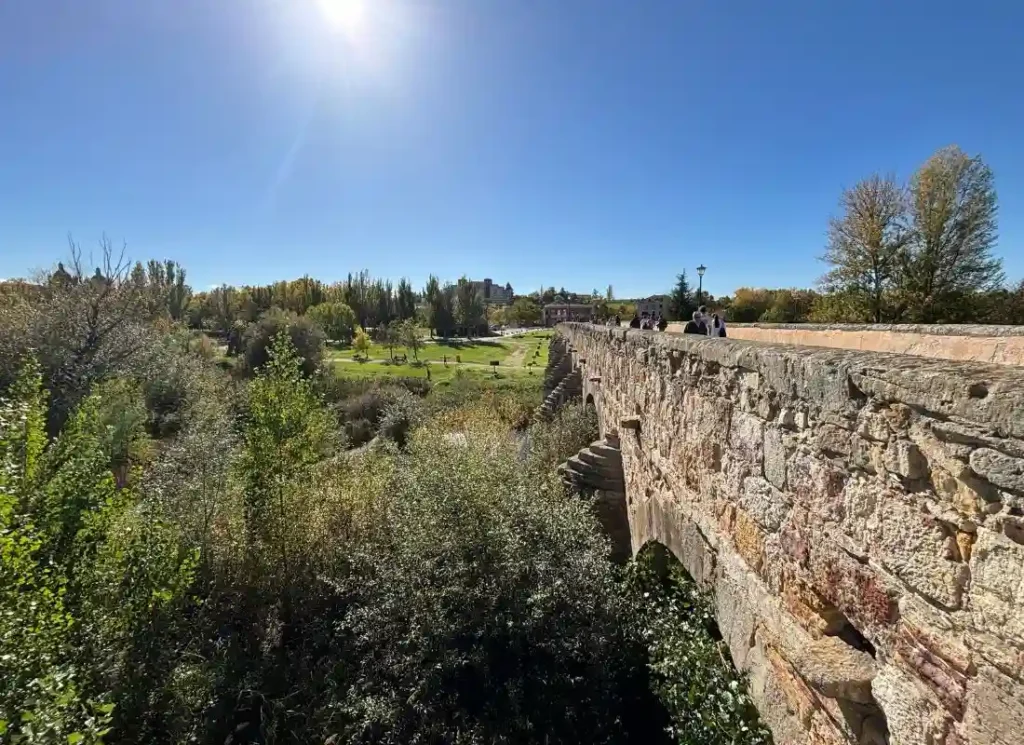
The Roman Bridge is one of Salamanca’s most iconic landmarks and a genuinely impressive piece of history, spanning the Tormes River on the southern edge of the old city. My parents had also seen the Roman bridges in Merida and Cordoba by the time we got to Salamanca (they had become self-appointed roman bridge experts by this point), and they admitted those were more dramatic, but this one is still beautiful and gives you a lovely view back across the city.
It’s free to walk across and well worth doing, especially as a route to the Mirador del Embarcadero.
5. Mirador del Embarcadero (Cathedral Viewpoint)
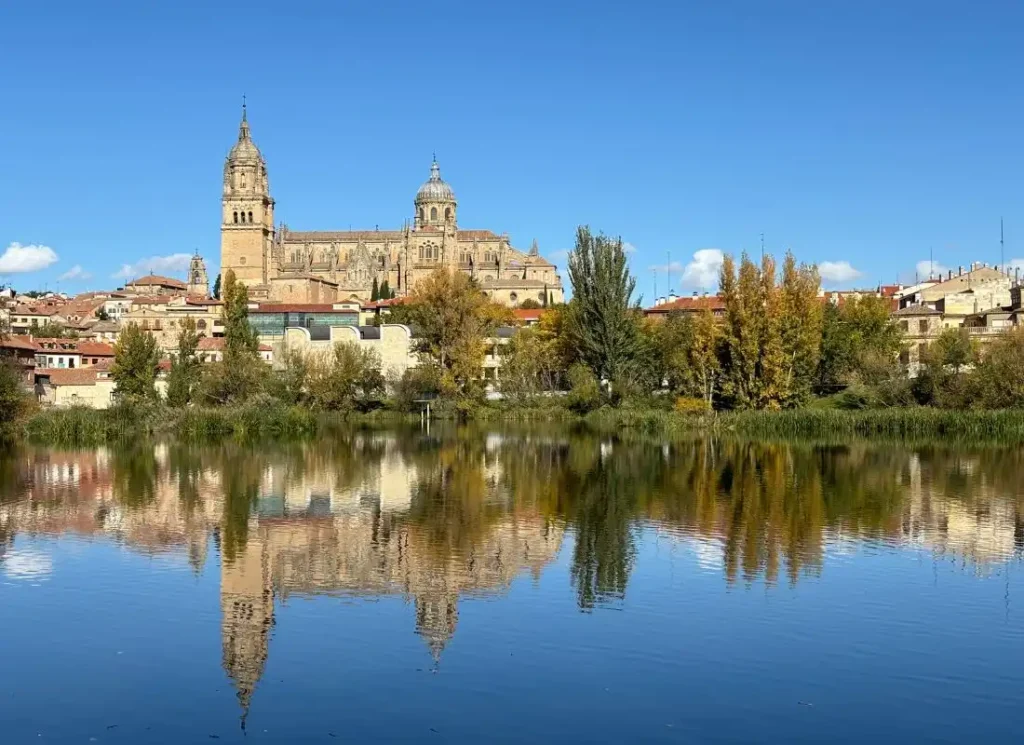
Just across the Roman Bridge and a short walk along the Tormes River, the Mirador del Embarcadero gives you one of the best views of Salamanca’s cathedral from the outside. On a still day the reflection in the water is stunning. It’s free, a short walk from the bridge, and completely worth it.
When we visited in late autumn, the viewpoint itself was in the shade, but the cathedral was still lit up beautifully in the sun. There’s also one of those phone holder stands nearby for a hands-free selfie with the cathedral behind you, which I found quite charming.
6. University of Salamanca (and the Rana de la Universidad)
The University of Salamanca, founded in 1218, is the oldest university in Spain and one of the oldest in Europe. Walking through the university buildings and courtyards, I kept having moments where it felt more like Hogwarts than a real place. The ornate sandstone architecture on the facades is extraordinary, especially the Plateresque entrance of the main building.
Here’s something fun: look carefully at the facade of the main university building and try to find the frog (the rana de la universidad). Legend has it that students who spot it before an exam will pass, which explains why you’ll see a small crowd of people peering very intently at the stonework. I’ll leave you to find it yourself, but it’s one of the most delightful little details in the city.
At certain times of year you can tour the interior of some of the university buildings and lecture halls, which is worth checking before you go.
7. Casa de las Conchas (House of Shells)
Casa de las Conchas translates as the House of Shells, and the name gives the game away completely: the facade of this 15th-century building is covered in 300 carved stone scallop shells in a repeating pattern. It looks wonderfully eccentric from the outside. Inside, it’s now Salamanca’s public library, which has been very practically modernised for the university students who actually use it. The inner courtyard is the nicest part to explore.
It’s free to enter and takes about 15 minutes, but the exterior is the real draw. One of the most photographed buildings in the city for good reason.
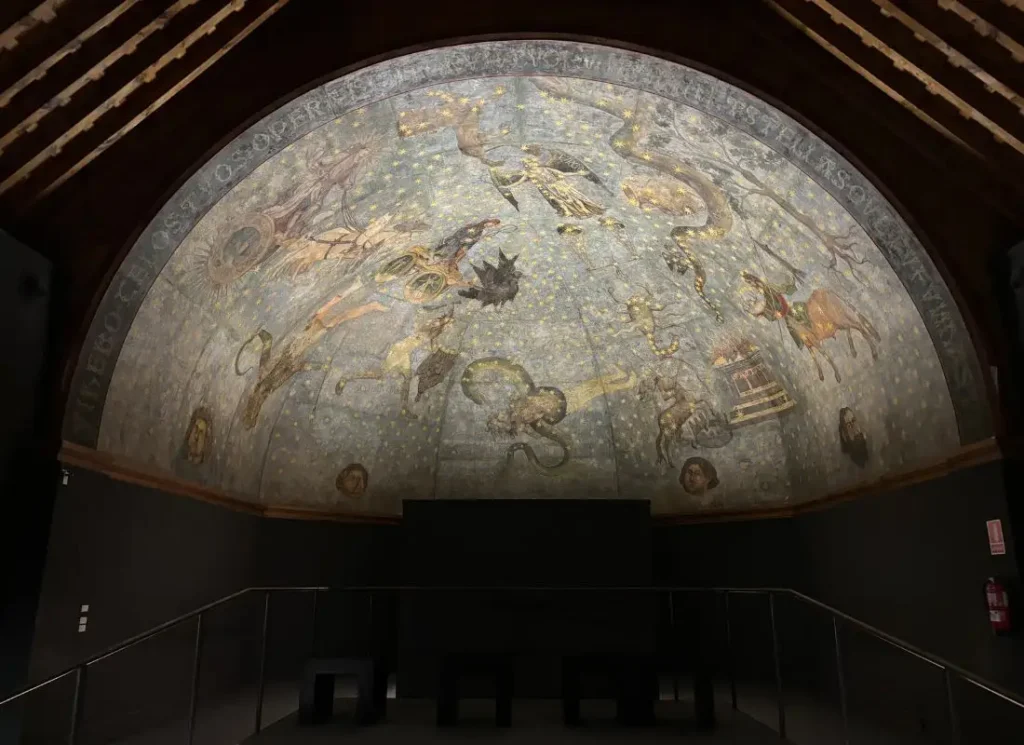
8. Cielo de Salamanca
The Cielo de Salamanca (Sky of Salamanca) is one of those hidden gems that you genuinely wouldn’t find unless you were looking for it. It’s a ceiling fresco tucked inside one of Salamanca’s university buildings, depicting the night sky in extraordinary detail. What makes it remarkable is that historians and astronomers have been able to accurately date its creation based on the position of the stars shown: that exact constellation was visible from the building in 2022, and won’t be again until 2060.
It’s easy to walk past without realising it’s there, so put it on your list.
9. Convento de San Esteban
The Convento de San Esteban is a Dominican monastery in the south of the city with a facade that gives the cathedrals a run for their money. Inside, it’s peaceful and beautiful, with inspirational quotes displayed in large lettering along the walls. There’s a lovely church attached where silence is requested, and a small museum with artefacts from the monastery’s history.
Just outside is the Plaza del Concilio de Trento, which has one of the only truly shaded garden areas in Salamanca. In summer that alone might make it worth the detour.
10. Palacio de Monterrey (Monterrey Palace)
The Palacio de Monterrey is a 16th-century renaissance palace that was never actually completed. It’s now been turned into a museum housing an impressive collection of renaissance artwork and religious paintings. It’s the priciest individual attraction in Salamanca at 9.50 euros, but still not extortionate by any means. Worth it if you love renaissance art and architecture; skippable if you’re tight on time or budget.
11. Casa Lis (Art Nouveau and Art Deco Museum)
Casa Lis is Salamanca’s art nouveau and art deco museum, and the building itself is the real star. The stained glass ceiling is extraordinary and one of the most beautiful things in the city. The only frustration is a very strict no-photos policy inside, so you’ll have to trust me on that one. The collections were interesting when we visited, and there’s a cafe inside too, though the stained glass partitions block what would otherwise be a lovely view over the river.
12. Huerto de Calixto y Melibea (Botanical Gardens)
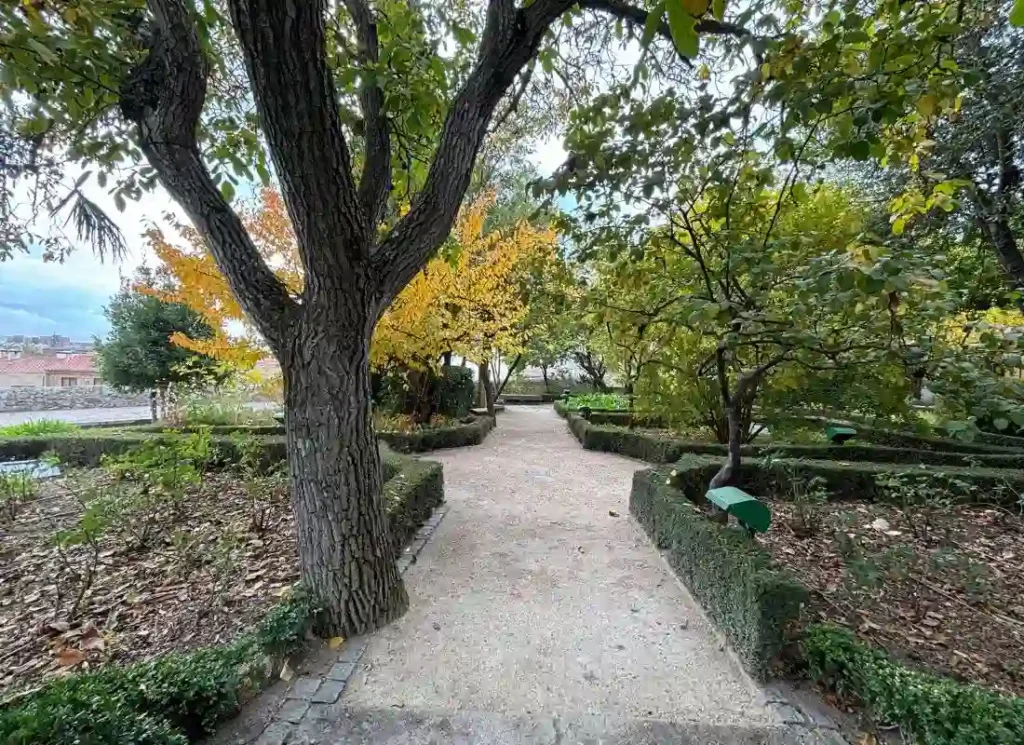
A lovely little botanical garden close to the city centre, the Huerto de Calixto y Melibea is a peaceful spot to take a break from sightseeing. There are plenty of benches, some nice views over the city, and a general sense of calm. Just note that the outer walls are not especially high, with a steep drop below, so keep a close eye on little ones if you’re visiting with kids.
13. Scala Coeli (Torres de la Clerecía)
La Clerecía is a baroque church that belongs to the Pontifical University of Salamanca, and its twin towers are one of the most recognisable features of the Salamanca skyline. You can climb the Scala Coeli (the towers) for views over the city, including a nice angle on the cathedral and one of the university courtyards. It’s good value and definitely worth doing if you enjoy a high vantage point, though the Ieronimus Tower is more impressive overall.
14. Plaza de Anaya
The Plaza de Anaya is a sweeping square between the cathedral and several university buildings, and it’s one of the most atmospheric spots in the city, especially after dark when everything is lit up. It’s a popular gathering point for walking tours; if you linger here, you’ll pick up interesting snippets of history from guides passing through. Well worth a slow wander.
15. Central Market of Salamanca (Mercado Central)
The Mercado Central is a large market close to Plaza Mayor, housed in a beautiful building surrounded by colourful stained glass. I didn’t visit myself, but my parents did and came back impressed. If you enjoy food markets, local produce, and beautiful old market halls, it’s well worth a look.
16. Torre del Clavero
The Torre del Clavero is a 15th-century octagonal tower that’s one of the last remaining pieces of Salamanca’s old city walls. It looks almost out of place standing alone amid the city streets, which makes it all the more striking. You can’t go inside, but it’s free to see from the outside and a great photo stop if you’re walking between the Roman Bridge and the city centre.
17. The Streets of Salamanca (Just Walk)
Honestly, one of the best things you can do in Salamanca is simply walk without a plan. The streets of Salamanca are full of surprises, from ornate doorways and courtyards to small squares you’d never find on a map. The golden sandstone catches the light differently throughout the day, and the atmosphere shifts completely when the sun sets and the city lights up.
Pick a direction and wander. You won’t regret it.
🇪🇸 Read more about Spain: A Full Packing Guide for Travelling in Spain
What to Know Before You Go to Salamanca
Getting there from Madrid: The train is the most comfortable option (1.5 to 2 hours, more expensive) or the bus (around 2.5 hours, cheaper). If you’re doing a day trip from Madrid, the train is the better call since it gives you more time in the city.
Is it walkable? Very. Almost everything on this list is within a 20-minute walk of Plaza Mayor, and the city is largely flat.
Tourist offices: There are actually two tourist offices in Salamanca: one for the city and one for the wider Castilla y León region. My parents visited both and came back with a very long list of recommendations, most of which made it onto this article.
Is there a mobile app or audio guide? There’s no standout app I’d specifically recommend. Download an offline map before you go since signal can be patchy inside some of the historic buildings (the Ieronimus Tower being a prime example).
Where to Eat in Salamanca
One thing I’ll be honest about: finding good places to eat in Salamanca took more effort than expected. A lot of restaurants have underwhelming ratings on Google Maps, and we spent a fair amount of time wandering before settling each night (and we’re not even that picky). Here’s what actually impressed us.
Dominicos is a cafe and restaurant just around the corner from our hotel. It had low reviews when my parents arrived, but it had just changed hands and they ended up eating there almost every day. Everything I tried was genuinely good, and the prices are reasonable.
Origen is the more upmarket option, with a classy atmosphere and prices to match, but the food was excellent. Worth it for a special dinner.
Cafe Atelier is a vegetarian restaurant with, genuinely, one of the friendliest waiters I have ever encountered. It’s better for lunch than dinner since the food is more tapas-style and pre-prepared, but it’s a lovely, calm spot.
Mesón Cervantes is a tapas place right in Plaza Mayor that was recommended by a friend who is actually from Salamanca. It has the right combination of authentic food and a great atmosphere.
Delicatessen looked completely unpromising from the outside and turned out to have some of the best food of our entire trip. Don’t judge a restaurant by its signage, apparently.
FAQs About Salamanca
Is Salamanca Worth Visiting?
Absolutely, and it’s one of the most underrated cities in Spain. It has a UNESCO World Heritage Site old town, genuinely impressive sightseeing, good food, reasonable prices, and a lively but calm atmosphere. It’s a great place to visit whether you’re doing a weekend trip or including it as part of a longer Spain itinerary.
Is Salamanca a Good Weekend Trip from Madrid?
Yes, it’s one of the best weekend trips from Madrid. Two to three days gives you plenty of time to see everything without rushing, and the train journey is only around 1.5 to 2 hours.
What is Salamanca Best Known For?
Salamanca is best known for its University of Salamanca, founded in 1218, which is the oldest university in Spain and one of the oldest in Europe. The city itself is a UNESCO World Heritage Site, renowned for its ornate sandstone architecture and its long history as one of Spain’s most important centres of learning.
What is the Famous Frog in Salamanca?
The rana de la universidad is a tiny carved frog hidden on the elaborate facade of the main university building. It’s a Salamanca tradition to try and find it without any help. Local legend says that students who spot it before an exam will pass, which explains why you’ll often see people peering very carefully at the stonework.
Is Salamanca Good for Vegetarians?
There are a few solid options. Cafe Atelier is the dedicated vegetarian spot and is great for lunch. Most tapas restaurants will also have vegetarian-friendly choices, and Origen is worth a visit for a more upmarket dinner regardless of your dietary preferences.
Are There Good Day Trips from Salamanca?
Yes. The wider region of Castilla y León has plenty to explore. Zamora, Avila, and Ciudad Rodrigo are all popular and easy day trips from Salamanca.

Hi,
I just wanted to reach out and let you know that your content has been quite helpful for me.
My friends from Allthingsaustria recommended your site and I’ve not been disappointed at all 🙂
Cheers,
Mihkael Caron